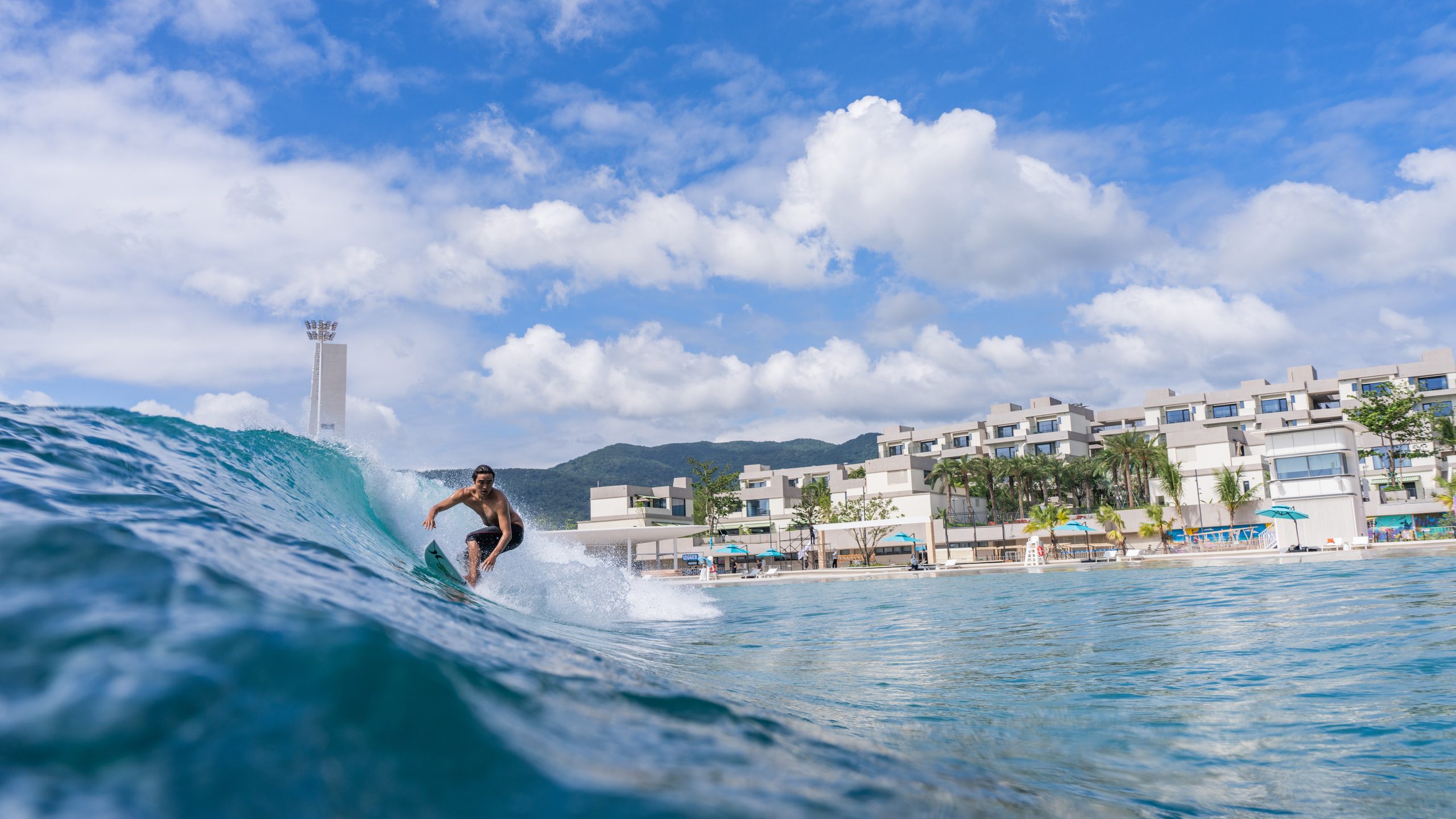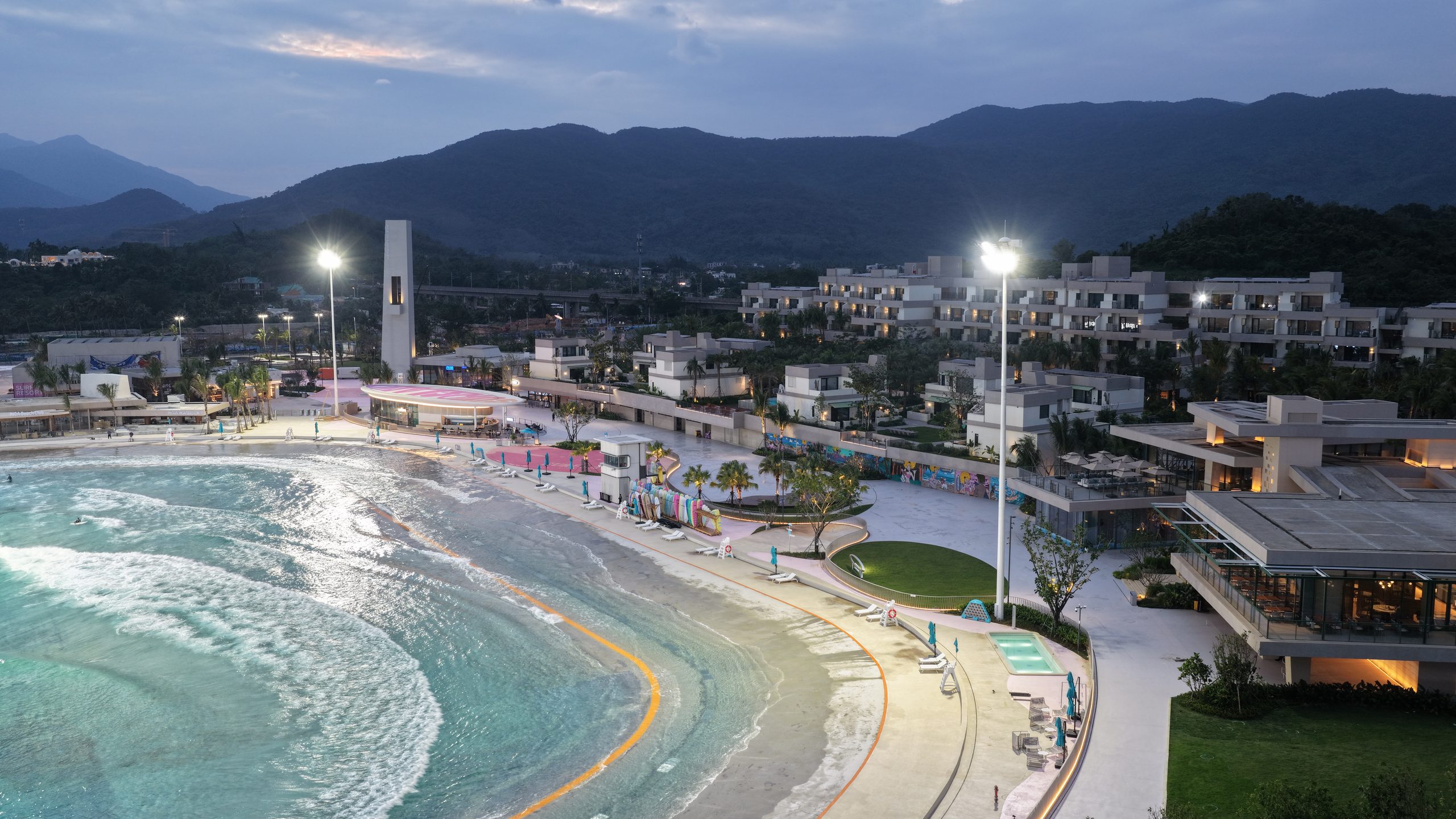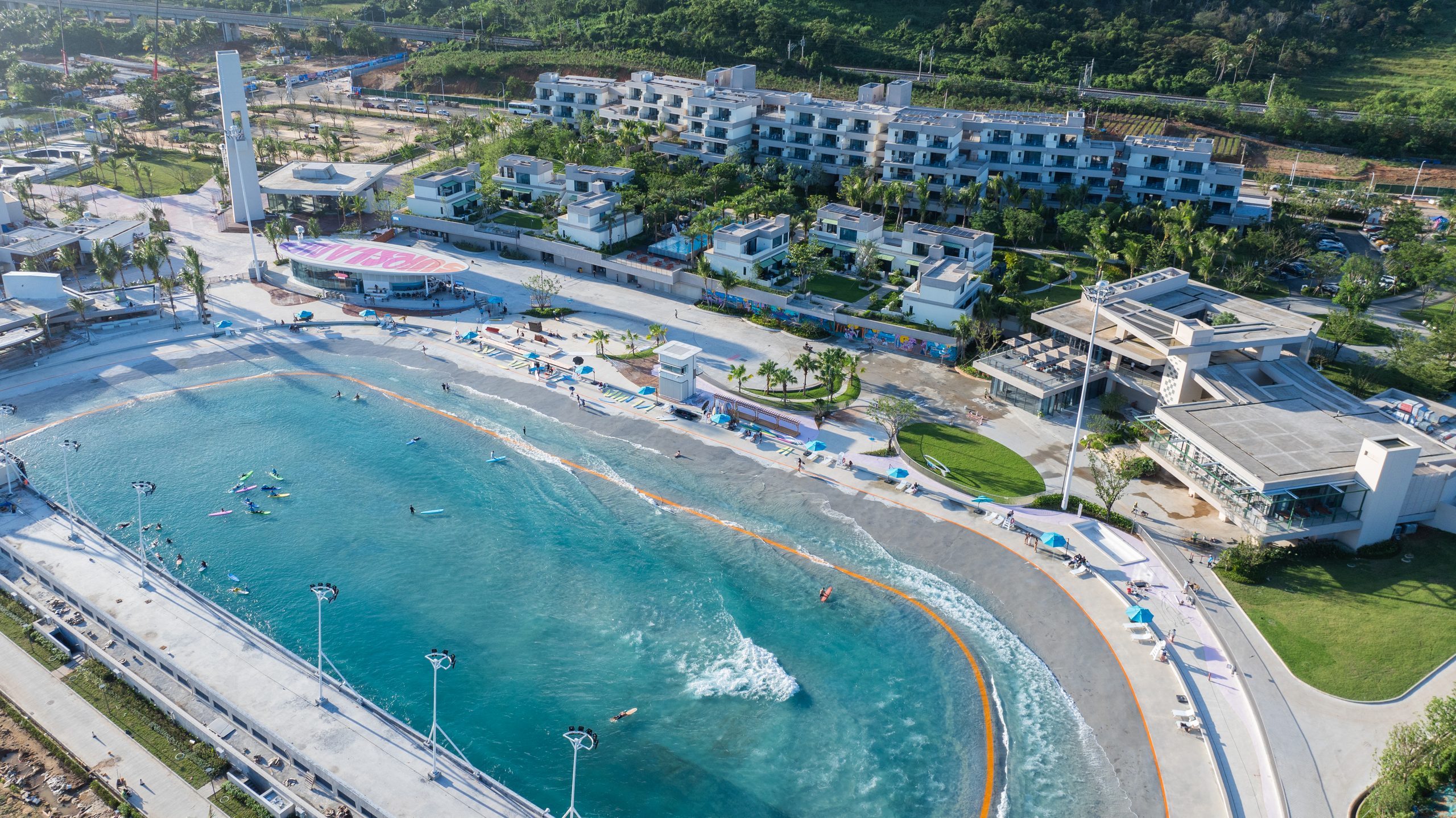
Wave pools get marketed to shortboarders: the barrel, the air section, the clip. Longboarders tend to assume a pool is not for them. At Riyue Bay the opposite is true. Of the six settings on the PerfectSwell® wave pool’s public calendar, three are longboard waves, and the intermediate one, Nose Rider, was designed for cross-steps and hang tens and nothing else. Add the first advanced setting, which works on a log as happily as on a shortboard, and a longboarder has more of this pool than any other kind of surfer. This is the guide to logging it.
The longboard settings on the public calendar
The pool runs 23 wave settings. Each public session runs one of them, with a capped lineup and one surfer per wave, and the park publishes six of those settings on its surf calendar. Three carry a longboard as the recommended board, and they line up neatly with how a logger progresses.
Shmee (B2) is the softest wave in the pool and the one nearly everybody starts on. It peels both ways off the peak, so there is room to stand up, fall off and go again without anything coming at you fast — the setting for a first ride, or for a longboarder bringing a partner or a child who has never surfed. Malibu (B4) is the step up once you can stand and trim: still friendly, but running in one direction with a real shoulder to ride along instead of white water. Most people catch their first proper wave here. Nose Rider (I1) is the reason to make the trip. A long, mellow wall built for longboarding — cross-stepping, hang fives, hang tens. If you came to log, this is your hour.
Above those three sits Stock Stack (A1), the first advanced setting: a faster, more demanding wall that rewards commitment off the bottom and, unusually for an advanced wave, works on either a log or a shortboard. A heavy-footed longboarder who wants a wall with real push, and who can handle a steep, quick take-off, will find it here. Beyond that, Lowers and the private-only settings are shortboard territory; our advanced surfer’s guide covers them, and the honest advice is that a log will feel sluggish there.
When the longboard sessions run
The pool puts its beginner settings through the middle of the day and its advanced settings at the edges, which is good news for a longboarder: the log waves are the daylight waves. On every day pattern the park has published for the autumn season, Nose Rider runs late morning, and on some of the extended-hours days in late September it runs a second time in the early afternoon. Shmee and Malibu each run several times a day, spread from mid-morning to the evening. Stock Stack sits with Lowers at the edges — first thing in the morning on Fridays, Saturdays, the extended-hours days from the 24 September reopening and through the National Day board, and last thing at night, under lights, from Sunday to Thursday once the peak is over.
Each setting runs in one direction, and the pool alternates lefts and rights day by day. For a longboarder that matters more than it sounds: a noseride on your forehand and a noseride on your backhand are two different skills, and a stay of three or four days gives you both. Our autumn calendar guide walks through the reopening patterns date by date, and we hold your sessions before you travel.
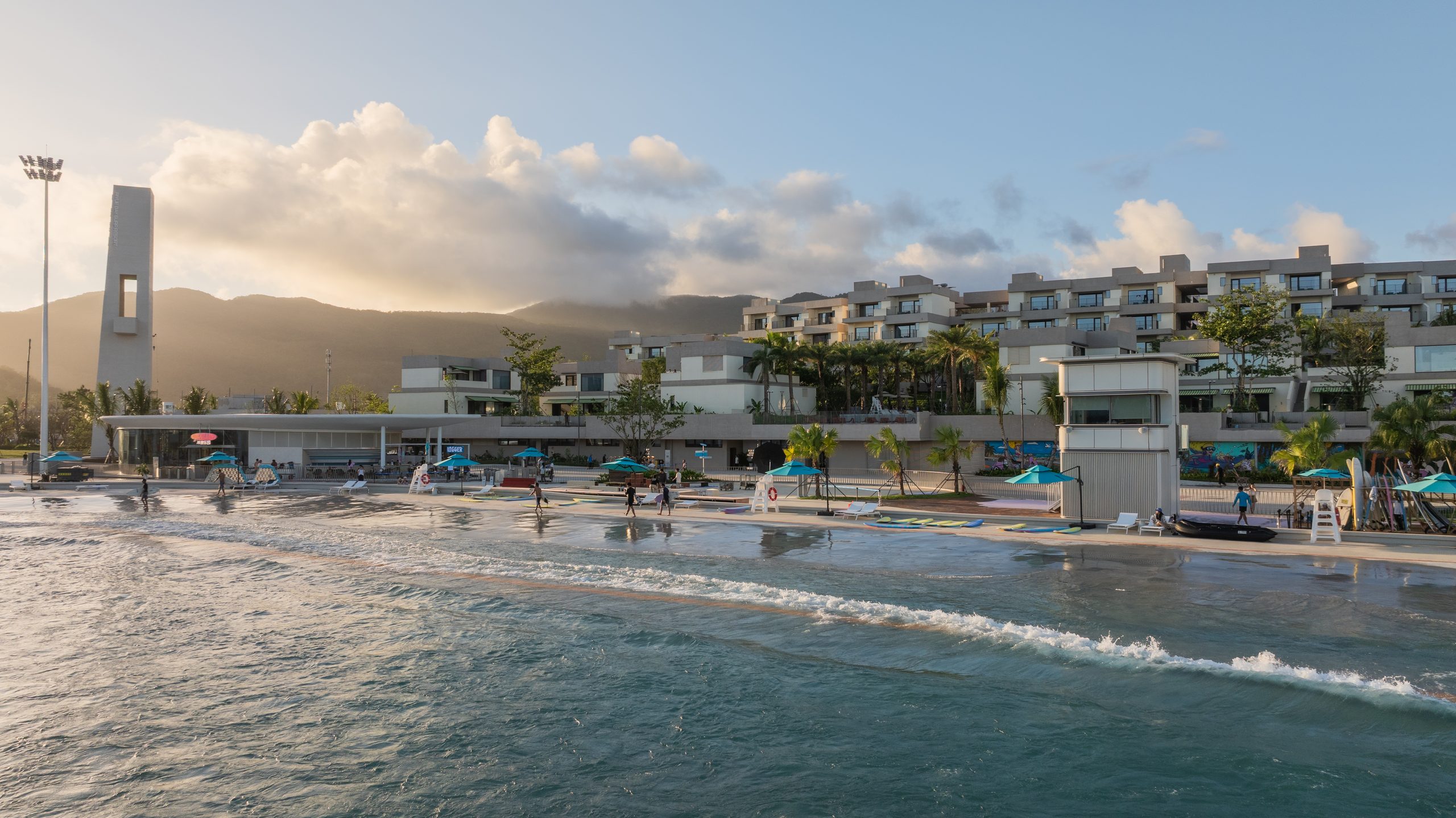
Why a pool is the fastest place to learn to noseride
Noseriding is a timing problem. The cross-step has to land you in the pocket at the exact moment the wave is standing up enough to hold you there, and in the ocean that moment arrives at random — a different wave, a different section, a different crowd, every time. On Nose Rider the wall shapes up in the same place on every wave. The section that held you up on the last ride will hold you up on the next one, so you can walk a step earlier, or later, and find out what changes. That is the whole promise of a PerfectSwell® pool — identical reps — and it applies to a hang ten as much as to a top turn.
What a longboard session looks like
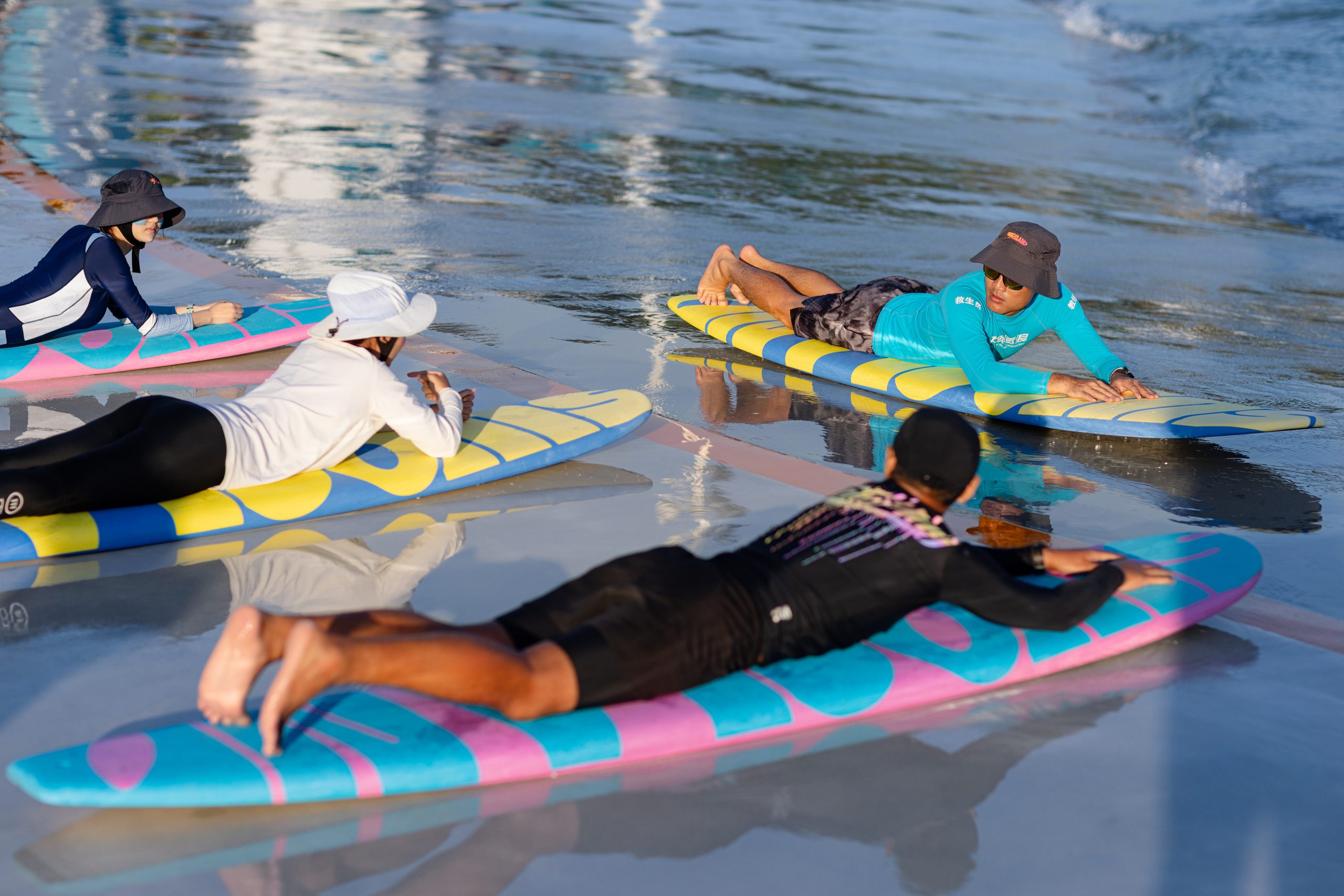
Arrive at least 45 minutes early: tickets, changing and board pick-up all happen before the clock starts. The published slot is an hour — a briefing on land about where today’s wave is standing up, then roughly 25 minutes in the water with a short changeover between rotations, then time on the deck to watch the next rotation go. Take-offs are angled and easy, one surfer per wave, with minimal waiting between rides and a guide in the water for the small calls on positioning; on the beginner settings, coaches are close by and soft-tops are provided. Every wave is filmed, which for a longboarder is worth more than it sounds: the difference between a hang five and a hang three is a step you cannot feel but can see.
The pool’s requirements are the honest test of which setting to book. For Malibu you should be able to paddle into a wave and stand on a moving board. For Nose Rider you should know your etiquette, catch your own waves and be confident on the open face, frontside and backside. If you are still mostly on the shoulder, a day on Malibu first is the fastest route up, not a demotion — our beginner’s guide covers the first two settings in detail, and the intermediate guide the stage above.
A four-day longboard plan
Most longboarders surf one or two sessions a day and give the rest of the daylight to the beach, the food or the golf. The shape that works is Nose Rider every day, a beginner setting for whoever you travelled with, and Stock Stack once you have earned it.
A logger’s week at Riyue Bay
Which longboard to ride
Bring your own if you like — the airport transfer van is sized for board bags — but you do not have to. The rental quiver beside the pool carries two Tide Moment longboards built for exactly this brief. The ITK is the balance point between classic and modern logging: a generous nose outline and a smooth entry rocker make paddling and take-offs easy, while a narrower, more modern tail keeps it lively on the face — a thruster, in 9’1”, 9’3” and 9’6”. The X One is the single fin, a longboard that does not demand perfect technique to be enjoyed, stable without feeling sluggish, and made to make a first hang five, or a longer hang ten, come easier; 9’2” to 9’6”. The lineup rotates, so tell us your height, weight and what you ride at home when you enquire and the right board is on the rack when you arrive.
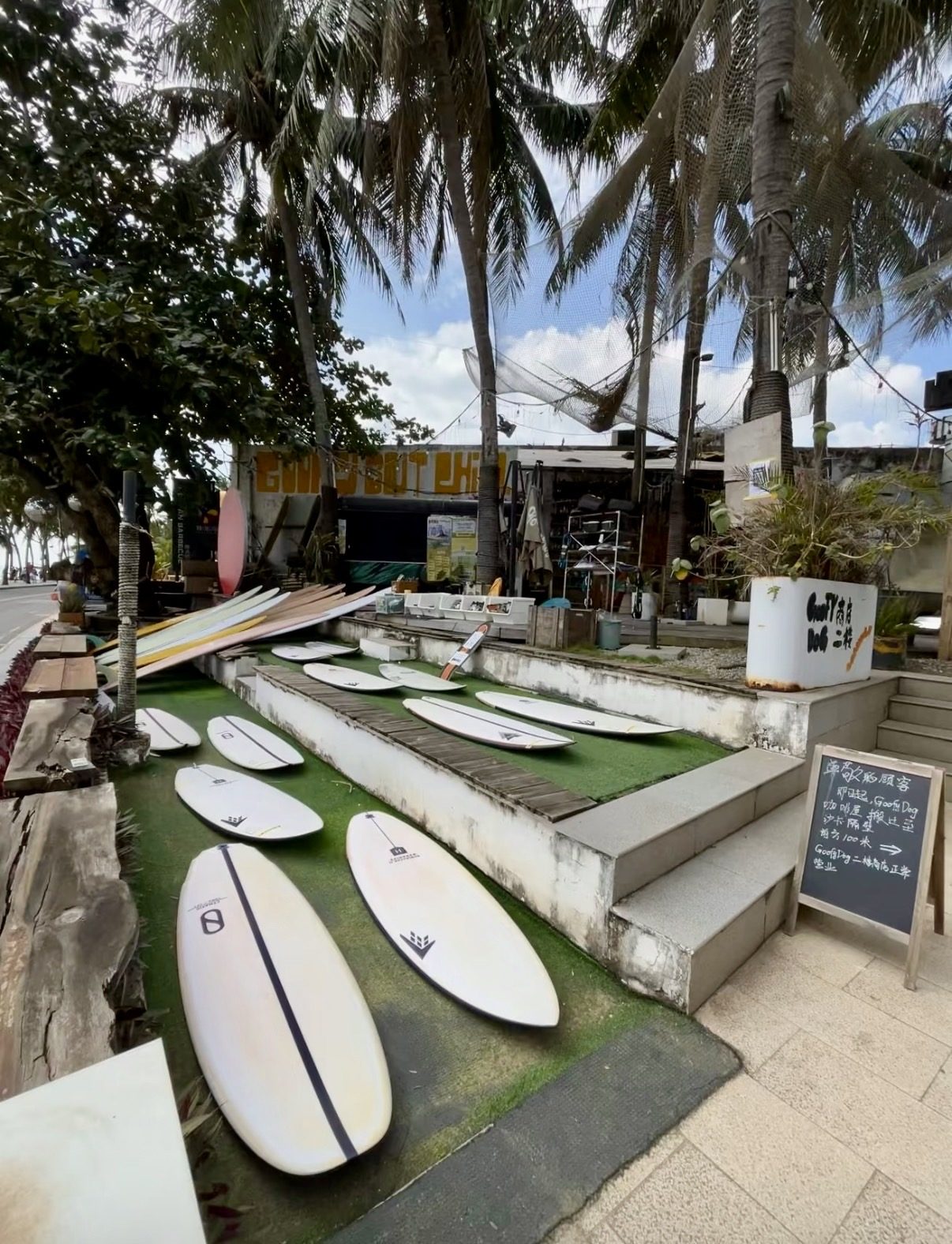
Then take the log to the ocean
No other wave pool can offer this part. Riyue Bay is the home of Chinese surfing, and its ocean lineup is a short walk from the pool deck. In the cooler months, roughly October to March, seasonal swell wraps into the bay and produces the long, organised walls it is known for — warm water, mid-length and longboard waves, and a fraction of the crowd at home. It is a longboard wave, and a noseride learned on the pool’s identical sections gets tested on a wall that moves the same afternoon, with no driving. Our Riyue Bay surf guide covers the breaks, the season and the boards.
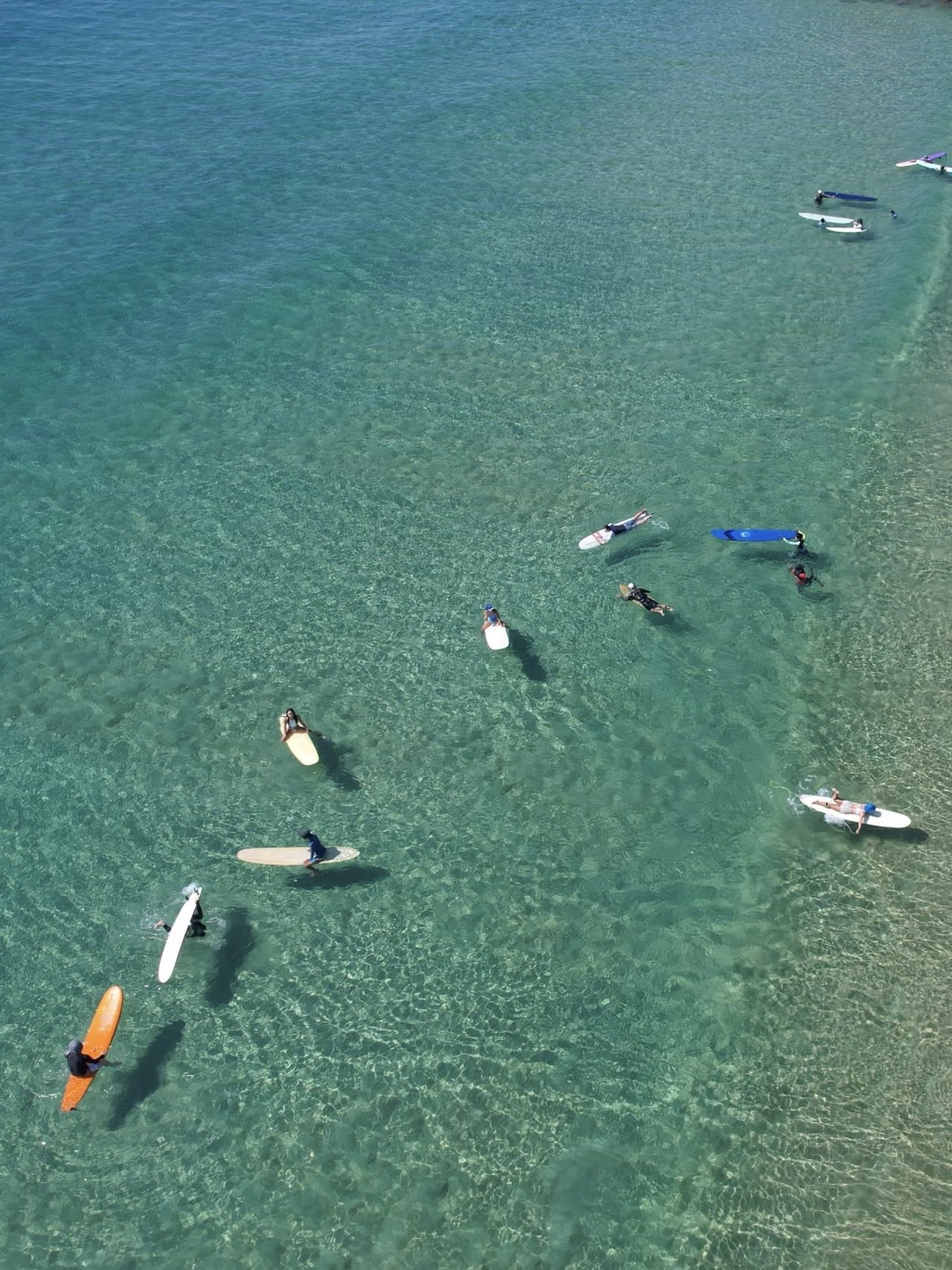
Bring the whole crew
Longboarders travel in mixed company more than most. The public calendar handles that on its own — Shmee, Malibu and Nose Rider are usually an hour apart, so a family can surf three levels before lunch and meet on the deck between them. A private booking goes further and hands the whole pool to your group, letting you mix settings inside the same hour: Shmee for the beginners, Nose Rider for the loggers, Jetty for the shortboarder who came along. The surf hotel sits inside the pool grounds, so a late-morning session never means a drive, and our family surf trip guide shows how the ages fit together.
Ready to log it?
Browse the trip packages, keep reading the journal, or send your dates, who is coming and what you ride to hello@surfchina.co (WhatsApp +8613893402173) through the booking page. We’ll line up Nose Rider around the direction you want, put the beginners on Shmee and Malibu at the same time of day, have the right log on the rack, and your sessions confirmed before you land.