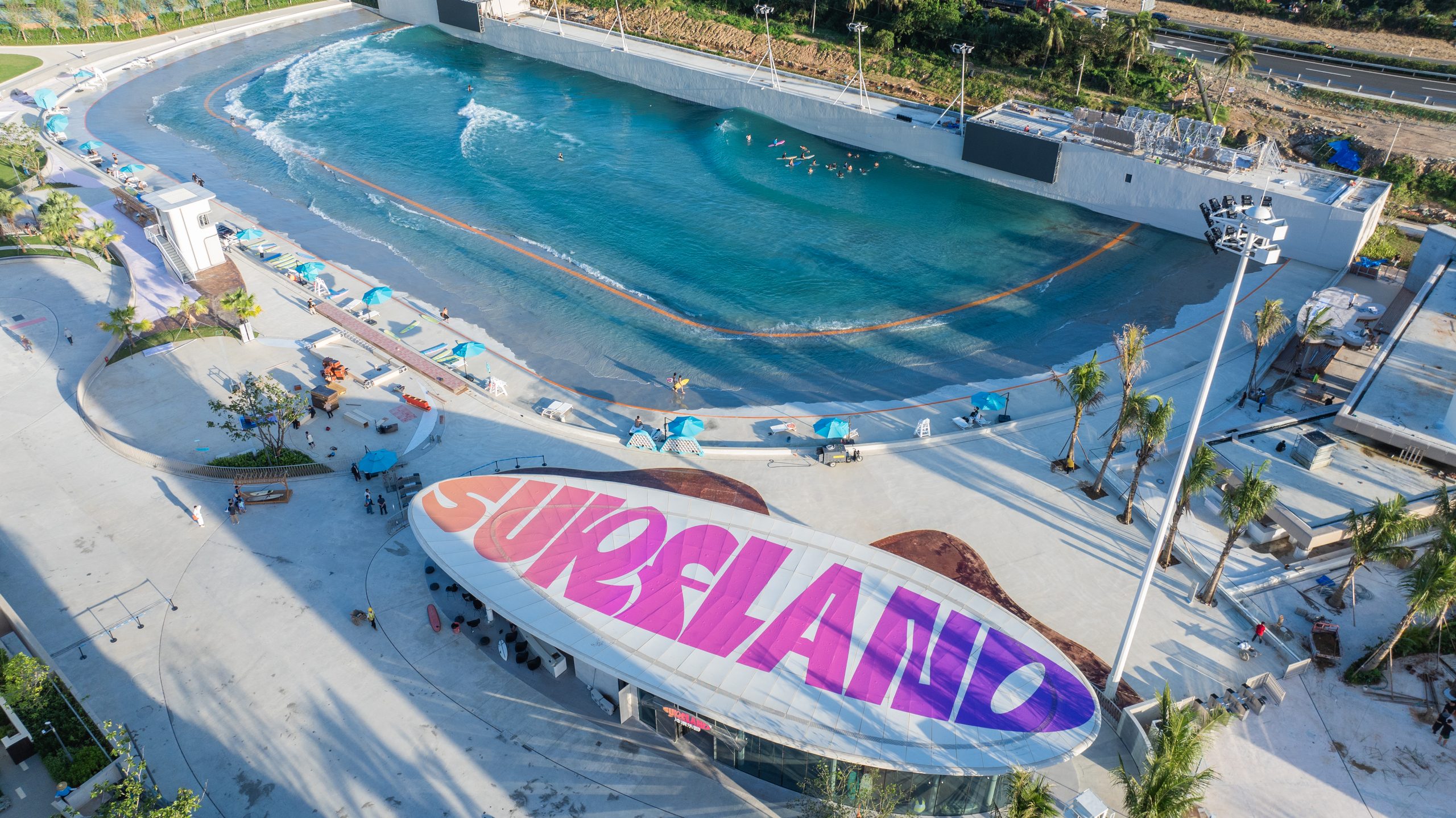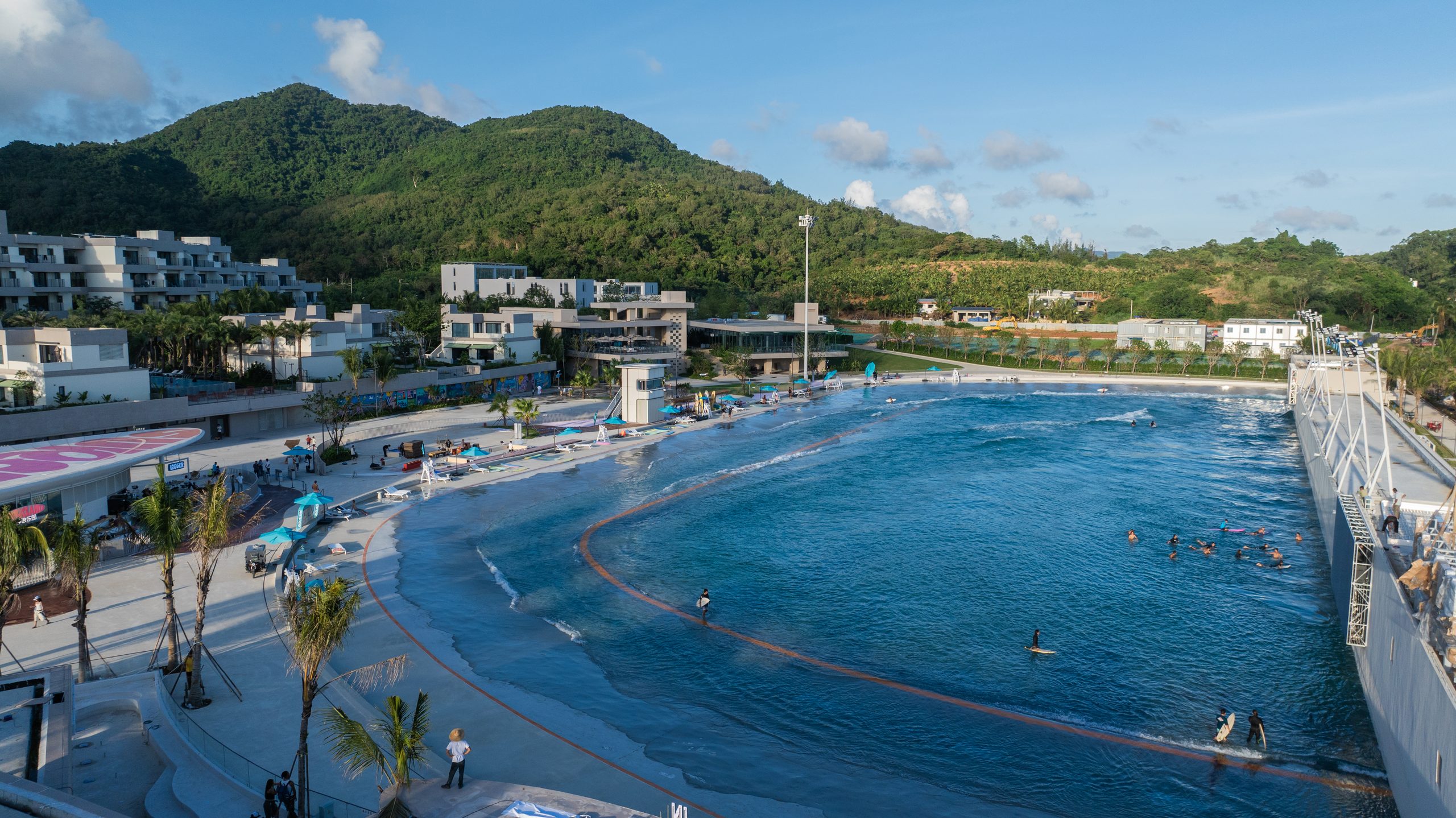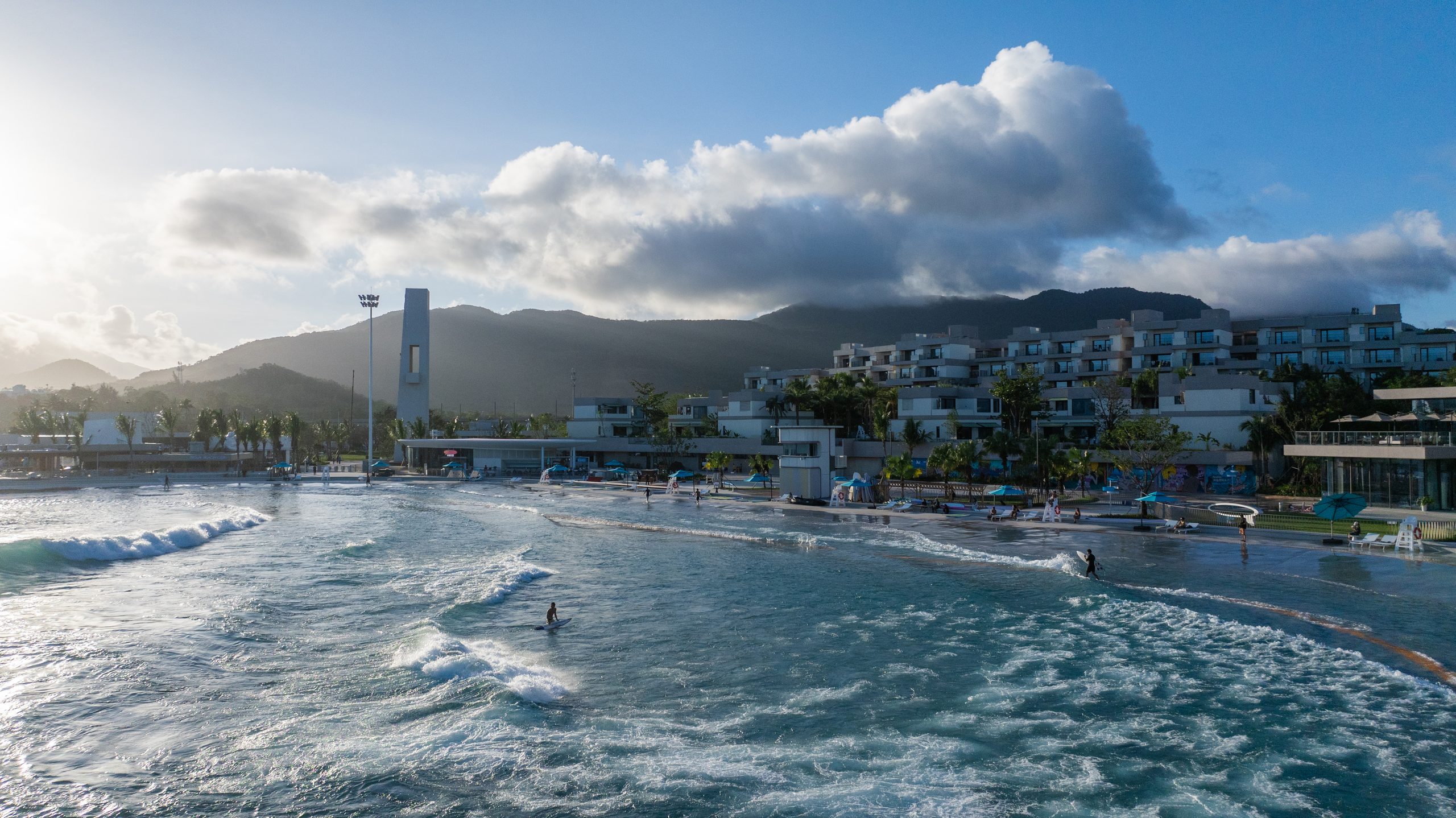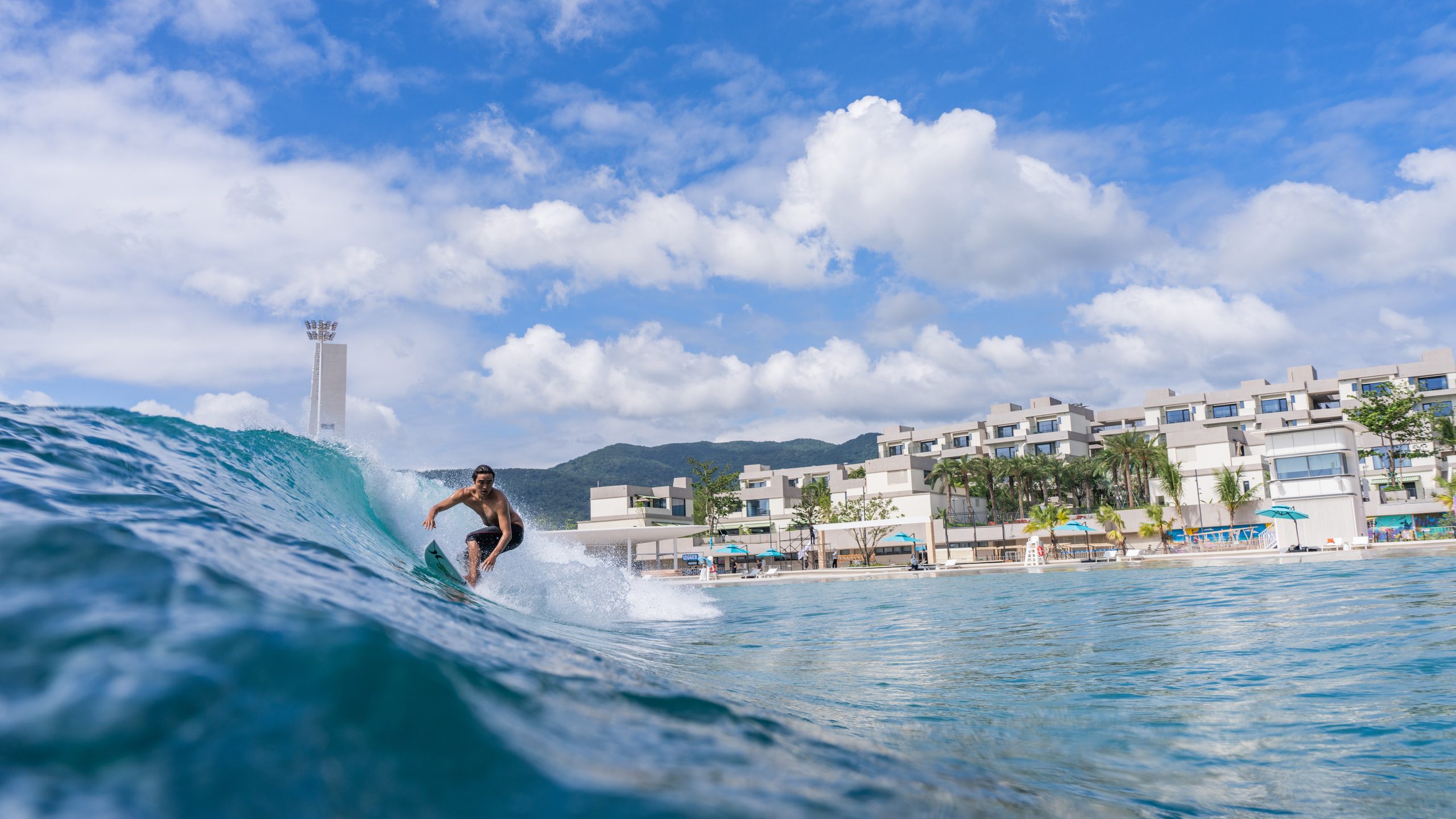
There is a stage every surfer recognises. You paddle into your own waves, you stand up most of the time, and you can ride along the face. But the bottom turn never quite becomes a top turn, your backside is a rumour, and the session two months ago that felt like a breakthrough has not repeated itself since. That is the intermediate plateau, and the reason it lasts so long has less to do with you than with the ocean. The PerfectSwell® wave pool at Riyue Bay, Hainan is built for exactly this stage: two dedicated intermediate settings, a chest-to-head-high wall that is the same wave every time, one surfer per wave, and a coach on the deck. Here is how to use it.
Why intermediate surfers get stuck
Learning a turn is a repetition problem. You need the same section, in the same place, often enough for your body to try a correction and feel whether it worked. The ocean almost never gives you that. A good session at home might be ten waves, three of them with a real wall, each breaking a little differently and arriving after a paddle-out, a wait and a scramble for position.
Beginners progress fast because their early skills — paddling, popping up, trimming — survive that variation. Intermediate skills do not. A late bottom turn on one wave and an early one on the next teach you nothing about the turn; they teach you about the waves. So most surfers sit on the plateau for years, not from lack of effort but from lack of identical reps — the one thing a PerfectSwell® pool has in unlimited supply.
The two intermediate settings at Riyue Bay
The pool runs 23 wave settings, and every session runs one of them, matched to a level. Two are built for intermediates, and they are different tools. Jetty (I2) is the shortboard wave: a clean, makeable wall you can actually draw a line on — the best setting in the pool for stringing turns together and dialling in intermediate progressions. Nose Rider (I1) is the longboard wave: a long, mellow wall built for cross-stepping, hang fives and hang tens. If you came to log, this is your hour.
Both are chest-to-head-high with an angled roll-in take-off, so you are on your feet and looking down the line before the wall stands up — think a friendly day at Trestles, on repeat. Each session runs a single setting with a capped lineup and one surfer per wave, so there is nobody on your inside and nobody to burn. Each setting runs in one direction, and the pool alternates lefts and rights day by day, so a stay of a few days gives you your frontside and your backside, and we line your sessions up around whichever you need to work on.
Are you ready for them? The honest test is the one the pool uses: you should know your etiquette, catch your own waves without a push, and be comfortable on the open face, frontside and backside. If you are still mostly on the shoulder, a day on the experienced-beginner setting first is the fastest route up, not a demotion — our beginner’s guide covers that stage.
What an intermediate session actually looks like
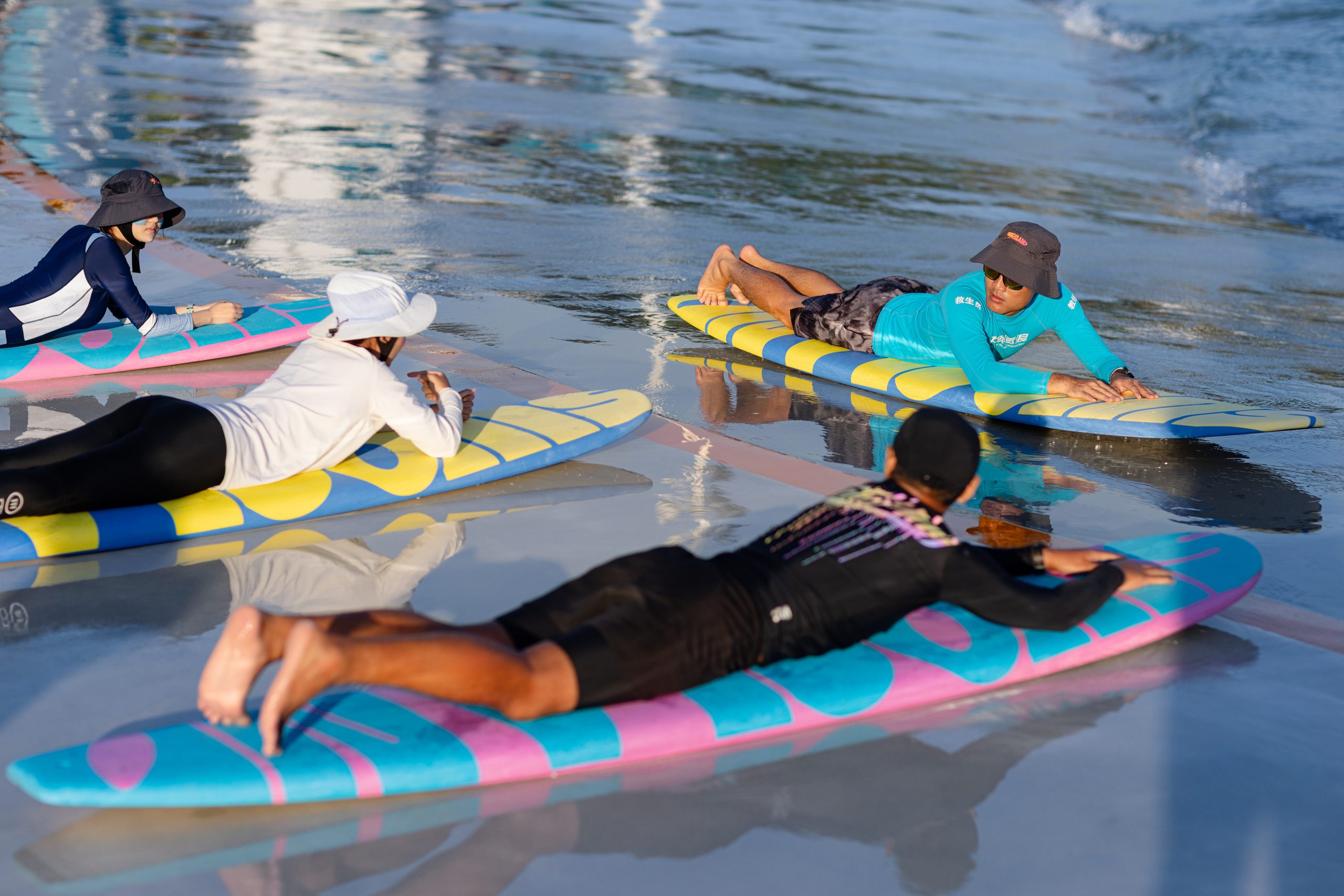
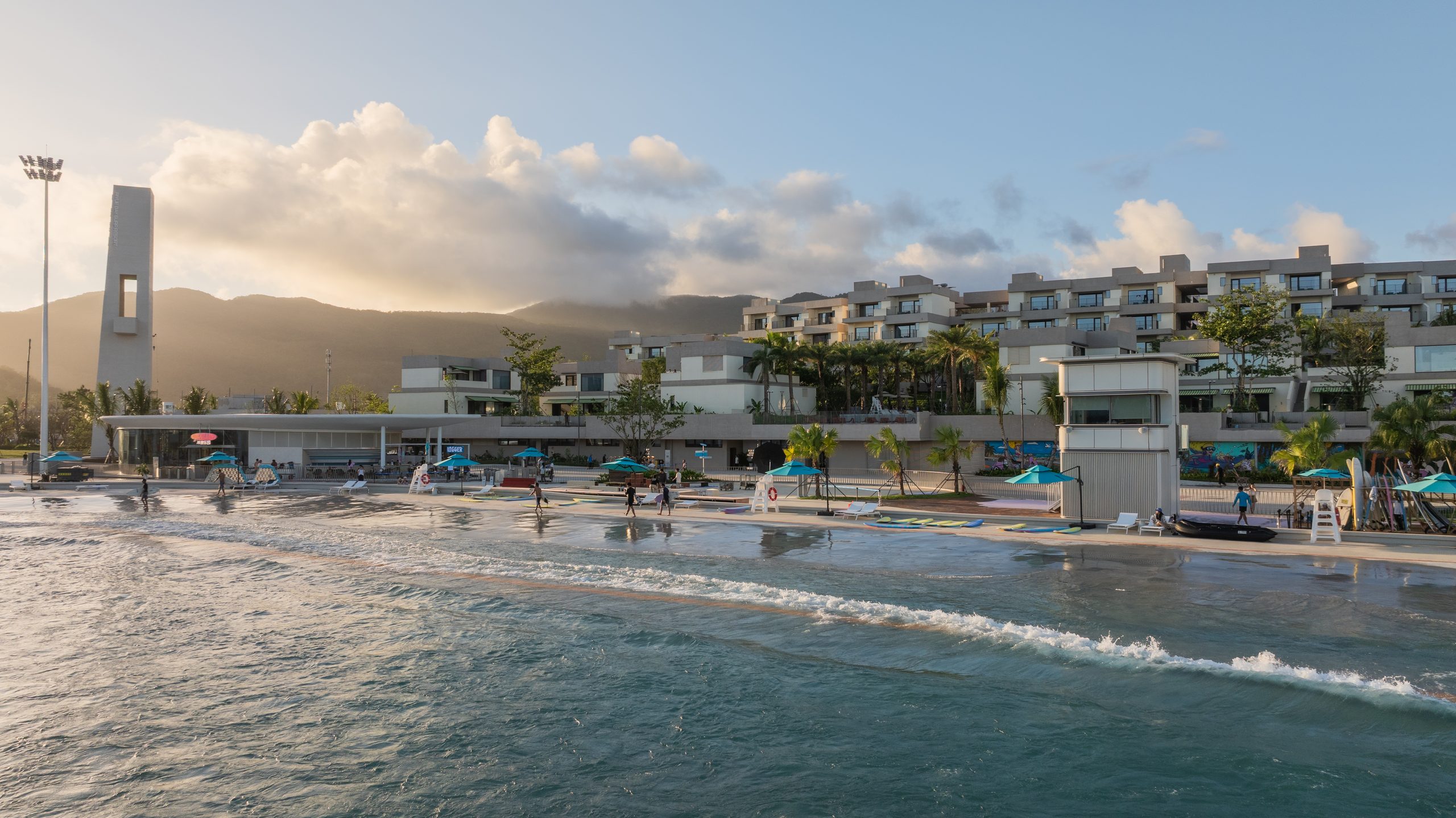
Arrive at least 45 minutes early: tickets, changing and board pick-up all happen before the clock starts. The slot on the surf calendar is an hour — around 30 minutes on land for a stretch, a briefing and the plan for what you are about to try on the wave that is running, then roughly 25 minutes in the water with a short changeover between rotations, then time poolside to watch the next rotation go and talk through what worked.
At the intermediate level that plan is the whole point. Go in wanting “more turns” and you will surf the way you always surf. Go in with one job — hold the bottom turn a beat longer, look at the lip before you go up, land the first top turn with your weight forward — and the pool lets you fail at that one job, fix it, and try it again on the next wave, which arrives a minute or two later. A coached session puts someone on the deck who can see what you cannot feel, and a video session sends every wave back to you as footage. Watching yourself go through a turn between rotations is worth a season of guesswork.
A five-day progression plan
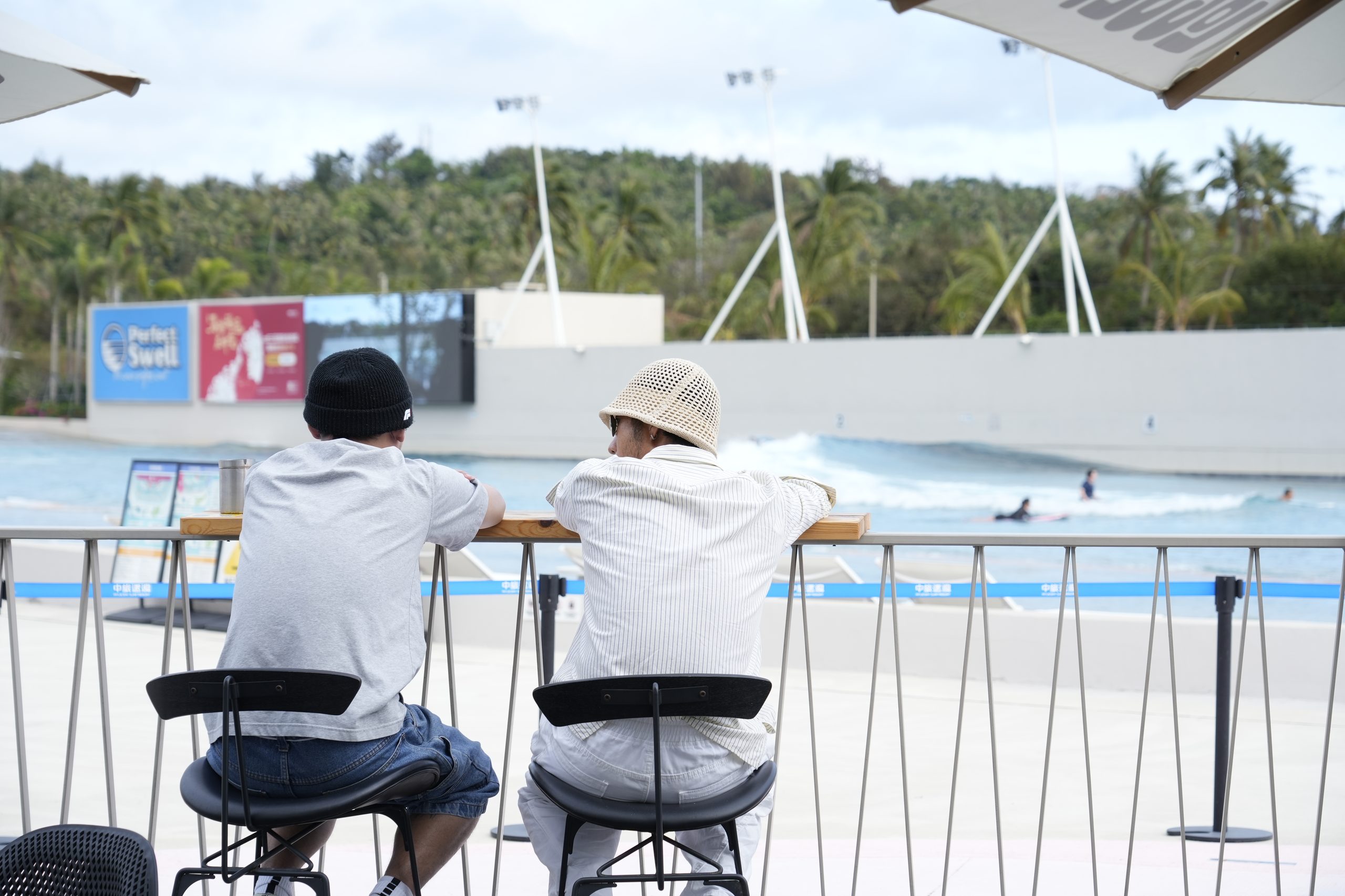
Most guests who come here to progress surf more than one session a day, and the shape of a good week is fairly consistent. Two sessions a day is the sweet spot — one in the morning, one later on, each with a single focus, with real rest and a look at the footage in between. Three is possible; four turns good technique into tired habits.
An intermediate week at Riyue Bay
Boards for the intermediate settings
A standard shortboard or a small-wave board with a little extra volume works beautifully on Jetty; soft and hard boards are both welcome. Bring your own if you like — the transfer van is sized for board bags — but plenty of guests fly carry-on and pull from the rental quiver beside the pool: intermediate-to-advanced shortboards like the Cabianca Candy, with a flat rocker and generous foam under the chest, or the Chilli Churro 2, a forgiving daily driver with a huge sweet spot, in sizes from 5’10” to 6’4”. For Nose Rider, the Tide Moment ITK and X One longboards run from 9’1” to 9’6” and are built for exactly the cross-step-and-hang-five brief. Tell us your height, weight and level when you enquire and the right board is on the rack when you arrive.
Then take it to the ocean
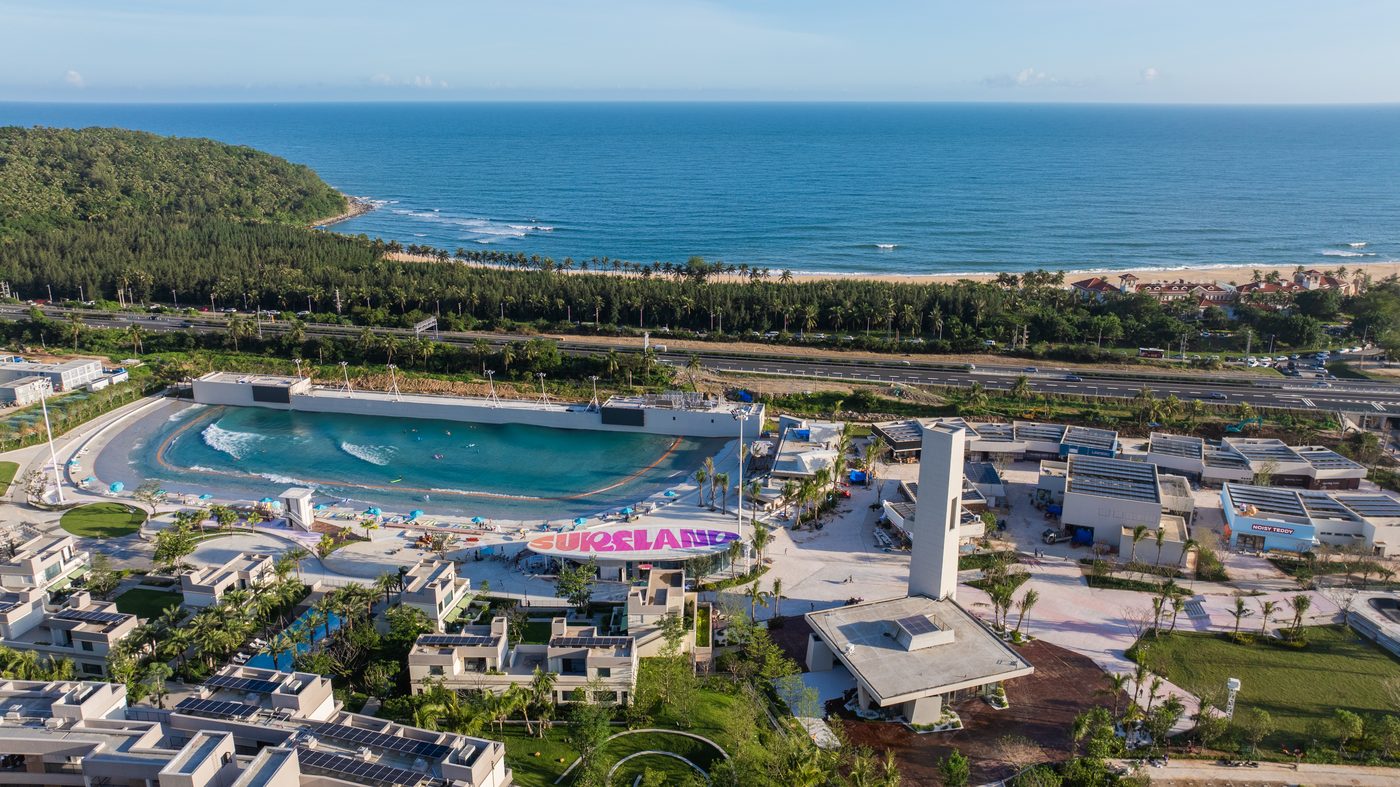
This is the part no other wave pool can offer. Riyue Bay is the home of Chinese surfing, and its ocean lineup is a short walk from the pool deck. In the cooler months, roughly October to March, seasonal swell wraps into the bay and produces the long, organised walls it is known for — warm water, mid-length and longboard waves, a fraction of the crowd at home. The pool teaches the movement; the ocean teaches you where to put it. Pool in the morning, ocean at sunset, same day, no driving. Our Riyue Bay surf guide covers the breaks, the season and the boards.
Bring the crew, or keep it to yourself
An intermediate week works alone, and it works better with two or three friends at the same level who keep each other honest about the one job. For a bigger crew, a private buyout hands the whole pool to your group and lets you mix settings inside the same hour — Jetty for the improvers, beginner rollers for a partner, an advanced wall for whoever earned it; our surf camp guide shows how coaches build a training block around it. Either way, the surf hotel sits inside the pool grounds, so two sessions a day never means a drive.
Ready to break through?
Browse the trip packages, keep reading the journal, or send your dates, level and what you are stuck on to hello@surfchina.co (WhatsApp +8613893402173) through the booking page. We’ll match you to Jetty or Nose Rider, line the sessions up around the direction you need to work, hold them before you land, and have a board on the rack when you get there.