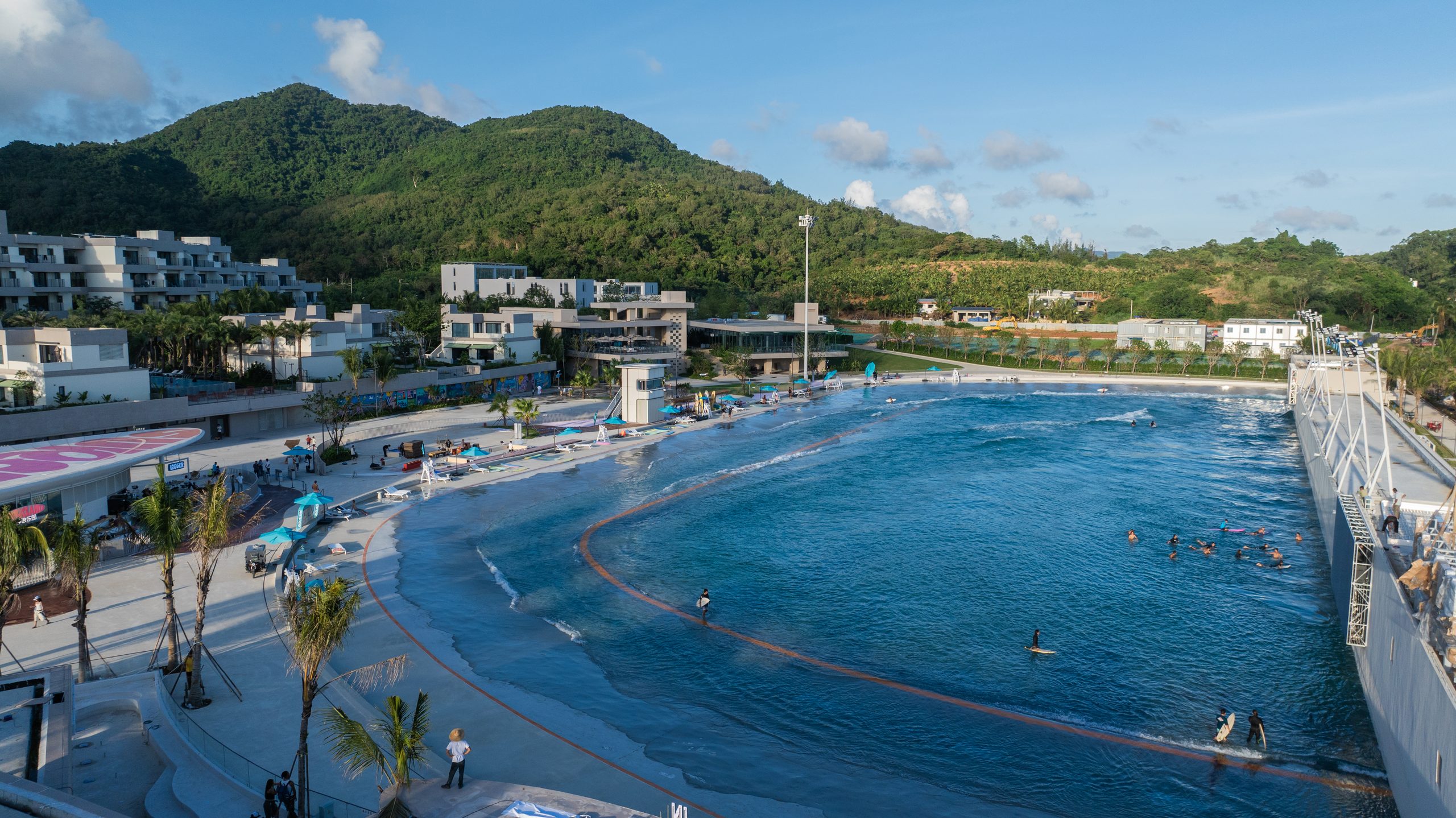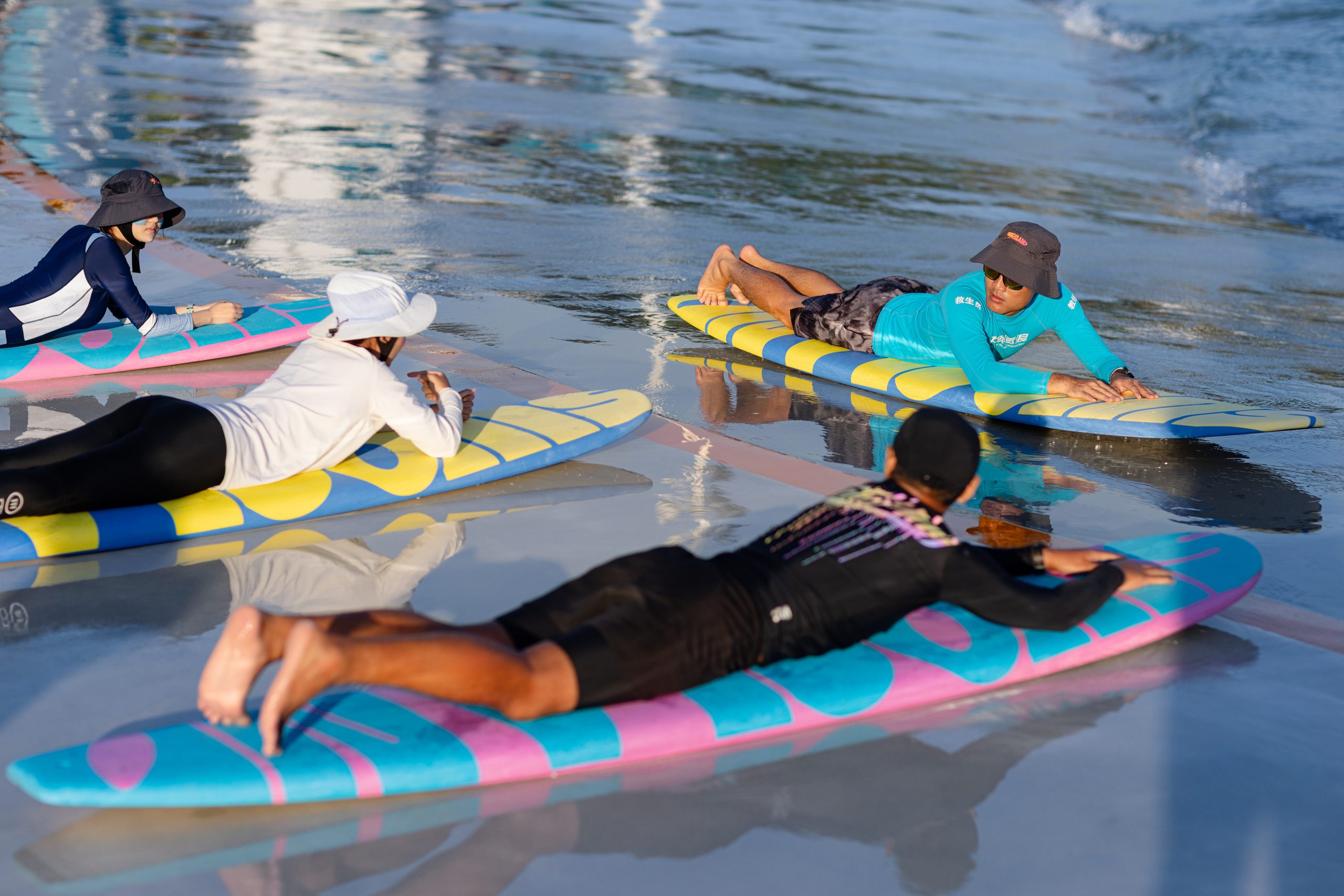
Ask a surf coach what makes their job hard and the answer is never the students. It is the ocean. By the time the next comparable wave arrives, the last ride is a memory, the coach was fifty metres away when it happened, and the correction — if it comes at all — comes in the car park. A wave pool removes every one of those problems at once. At the PerfectSwell® pool at Riyue Bay, Wanning, the same wave arrives on cue, one surfer per wave, with the coach standing where they can see the whole ride and a camera filming it. This is the guide to coaching there: who teaches, in what formats, what a coached hour looks like at each level, how to use the footage, and what it costs.
Why coaching works differently in a wave pool
Surfing is a repetition sport trapped inside an unrepeatable environment. Almost every skill in it — the pop-up, the bottom turn, the timing of a cutback, a barrel line — is a movement that improves with attempts, and the ocean rations attempts by the dozen per session, each on a slightly different wave. Coaches call it the feedback-loop problem. You take a wave, something goes wrong, and by the time you paddle back out and wait through a lull the coach’s note has nothing to attach to.
The pool closes that loop to seconds. Every wave setting at Riyue Bay delivers the same wave at the same size on a fixed cadence, so the surfer who just blew a bottom turn gets to try the same bottom turn, on the same section, a paddle later. The coach saw the ride from start to finish from a few metres away, the correction lands while the wave is still fresh, and the next attempt tests it. Attempt, feedback, identical retry — that is the whole method, and it is why one coached hour here so often fixes something that years of well-meaning ocean advice never reached. Our PerfectSwell® explainer covers the settings; this piece is about the person standing beside them.
Who coaches, and in what format
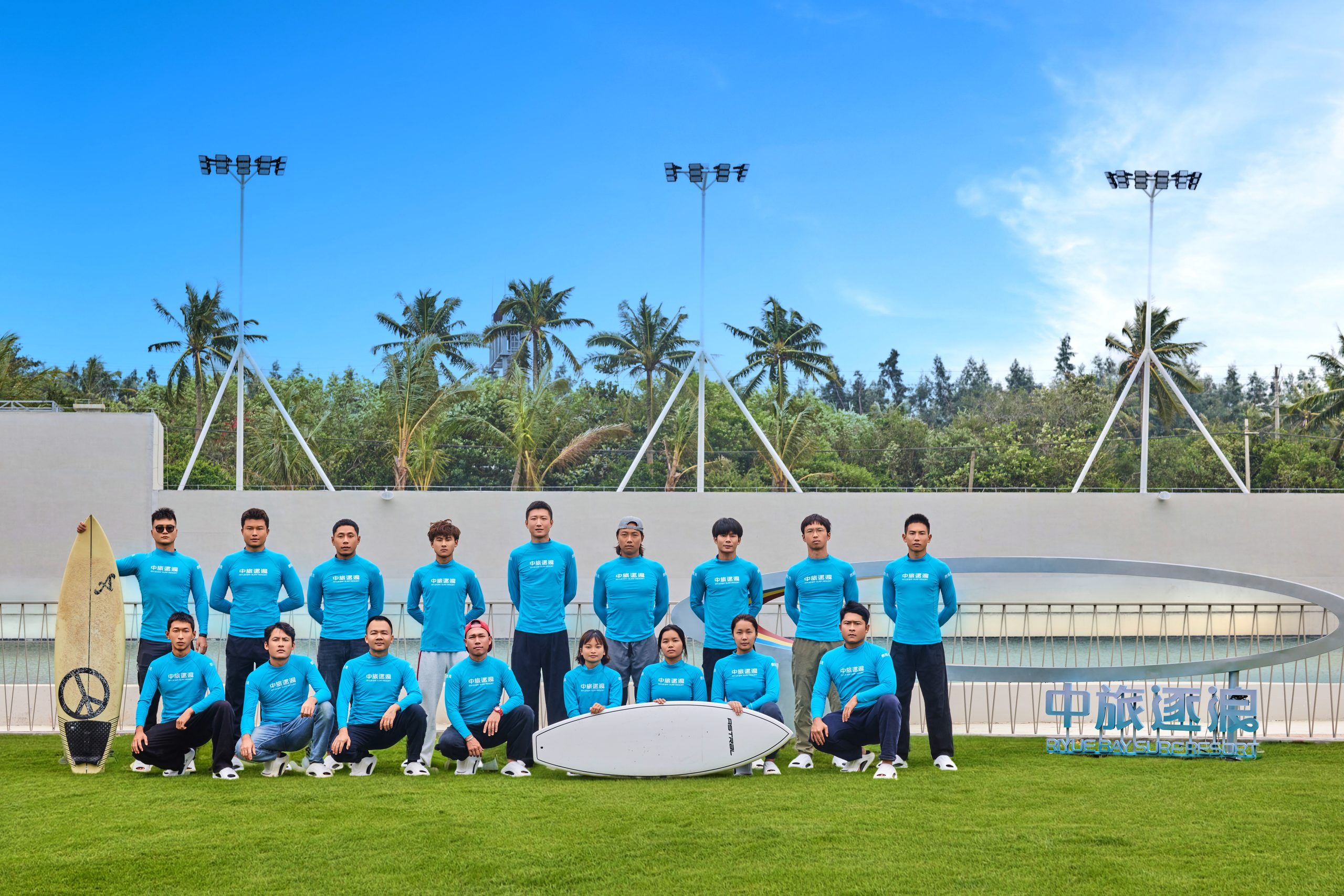
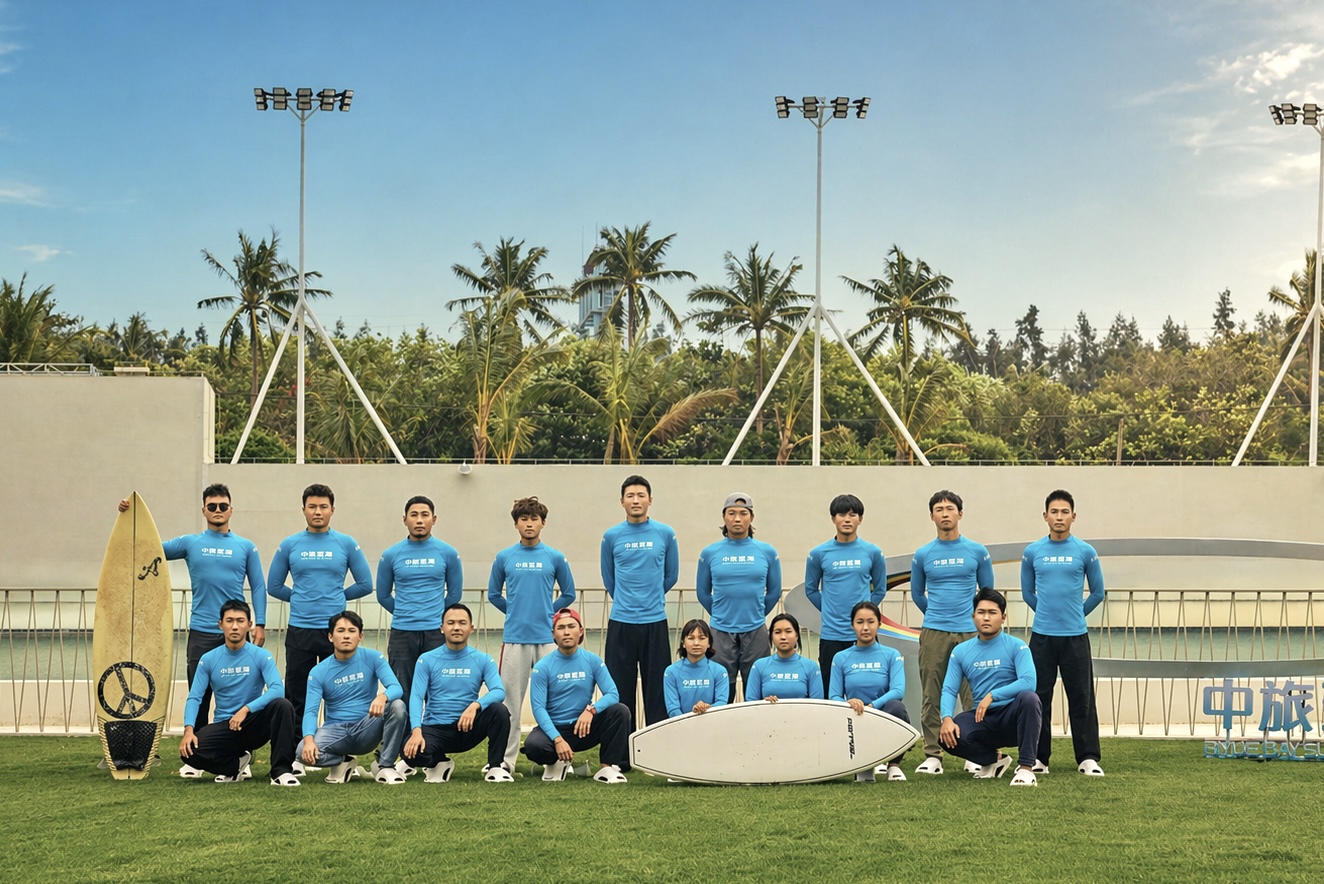
Every program at the pool is led by qualified coaches with competition and teaching backgrounds, and there are enough of them that the ratios stay small. On a busy beginner session that is what the numbers look like: at most four surfers per coach, with private instructors available if you would rather have a coach to yourself. The formats break down like this.
Private one-on-one — 60 minutes, any level. The coach is yours for the session, on the deck or in the water, and every wave you take is theirs to watch. This is the format for a specific goal: a first green wave, a first real cutback, a backside barrel you have never made.
Group clinic — 60 minutes, a maximum of four surfers per coach. The right choice for a crew of friends at roughly the same level, and for most beginners, who benefit from watching the person before them get the same correction they are about to get.
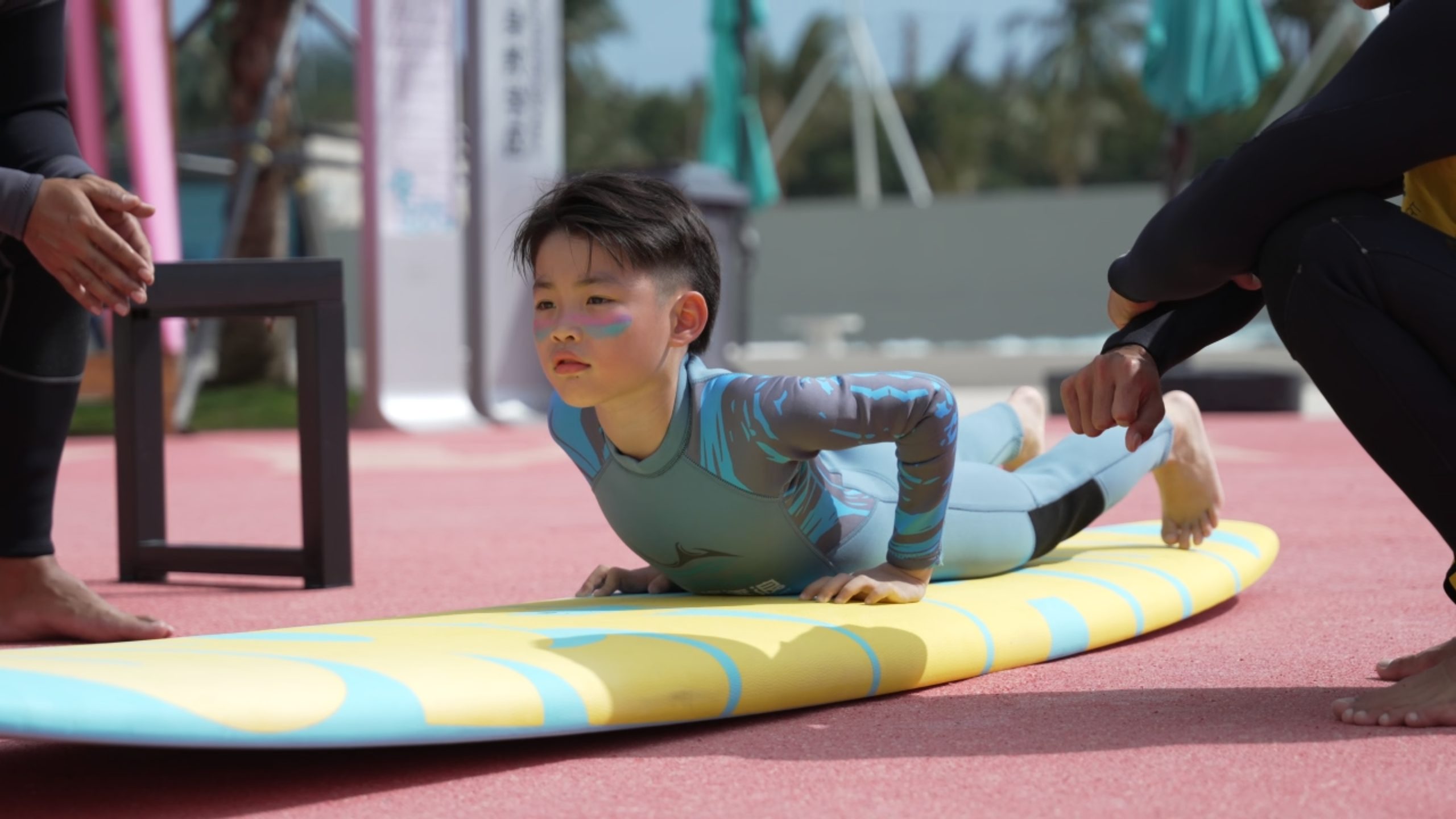
Kids program — ages six to fourteen. The usual guideline for the pool is age six and up, 1.2 metres tall and a comfortable short swim; experienced younger children may be assessed by the coach. Coaches walk children through the basics on land before they get wet, then push them into gentle rolling waves with a coach in the water. Our family surf trips guide covers the rest of a family week.
Pro training camp — multi-day, by invitation, built around private sessions and the settings that never appear on the public calendar. Video analysis is an add-on available with every one of the above.
Every wave is filmed. Here is how to use that.
Every wave in the pool is filmed, and it changes what a session is for. In the ocean you surf on feel and a coach’s memory; here you surf, then you watch. Photo and video is available per surfer per session, video analysis can be added to any session, and the Surf & Stay package includes one premium video session for each surfer somewhere across the trip, so most guests go home with footage whether they planned to or not.
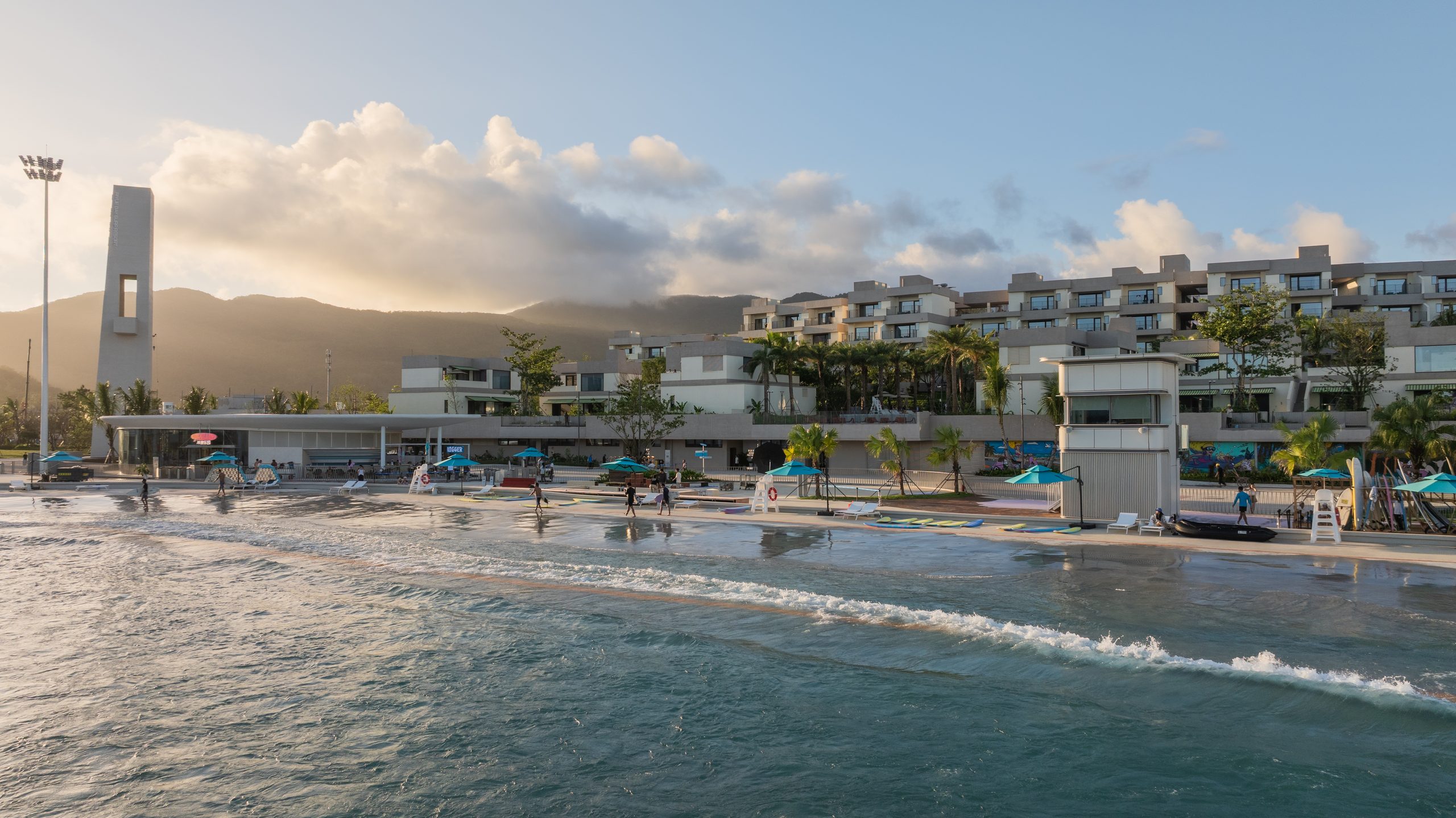
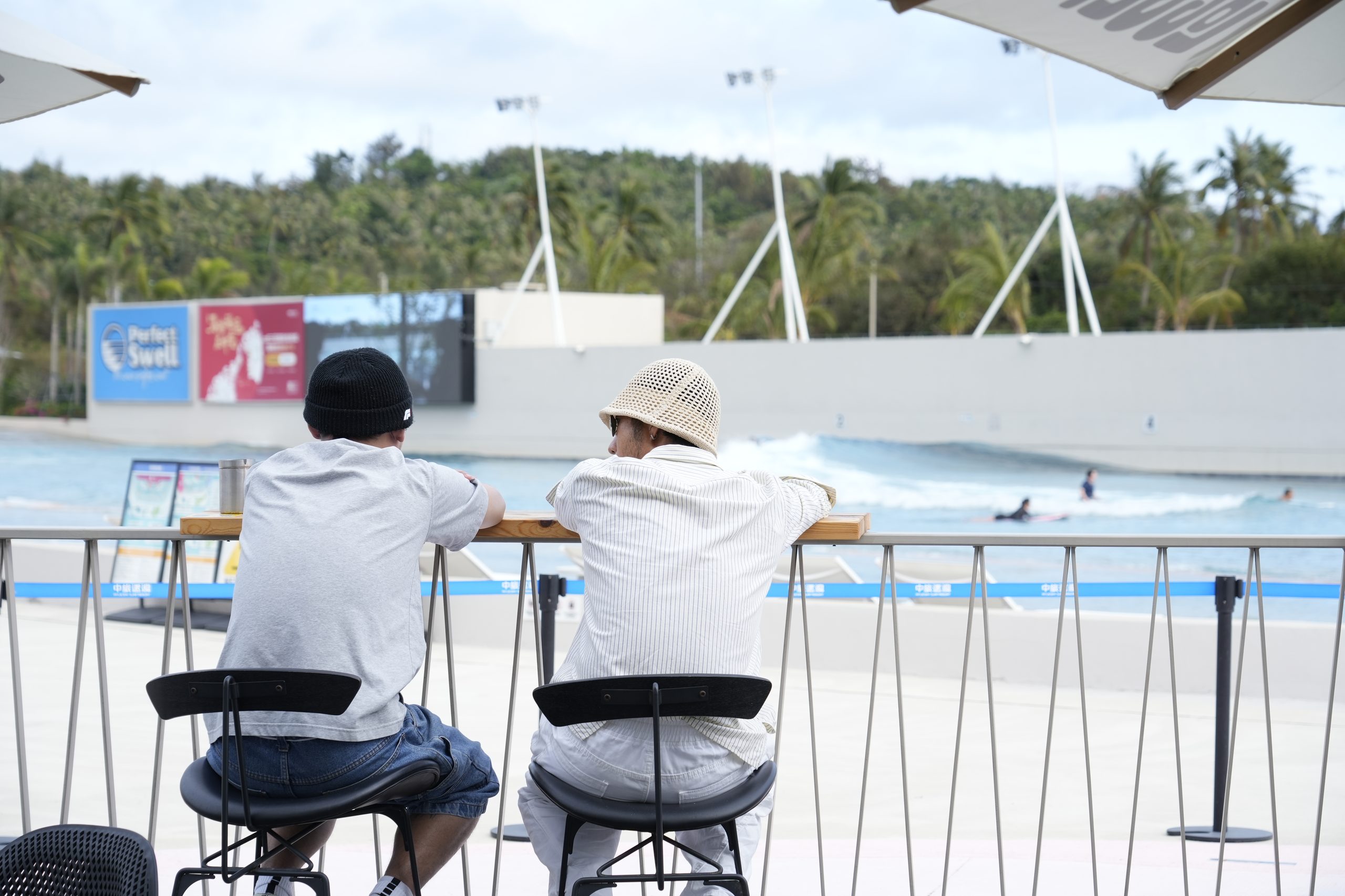
The footage is most useful in the gap between sessions, and the gap has a home: the café on the pool deck, in the shade, with the pool in front of you and your morning on a screen. The rule we give guests is simple. Watch the session while it is fresh, with the coach if you have booked one, and pick one thing to change. Not three. Then paddle out for the afternoon session and make it about that one thing, on a wave that will behave exactly as the morning’s did. Surfers who arrive with a list of five faults and leave with one fixed have had a better trip than those who tried to fix all five — our recovery guide is about the other half of that gap.
What coaching looks like at each level
Beginners: from land to the first green wave
A first session starts on land — paddling, the pop-up, where your feet should land, how to fall — then moves into gentle rolling waves with the coach in the water pushing you into every ride. Softboards are provided for the session setup and life jackets are there on request. Most first-timers are standing before the hour is out, and the pool’s gentlest settings are built so the wave only steps up when you do. The coach’s job over a few days is to move you from the whitewater to the open face of an unbroken wave, which is the moment surfing becomes surfing; our beginner’s guide walks the whole progression.
Intermediates: the plateau breaker
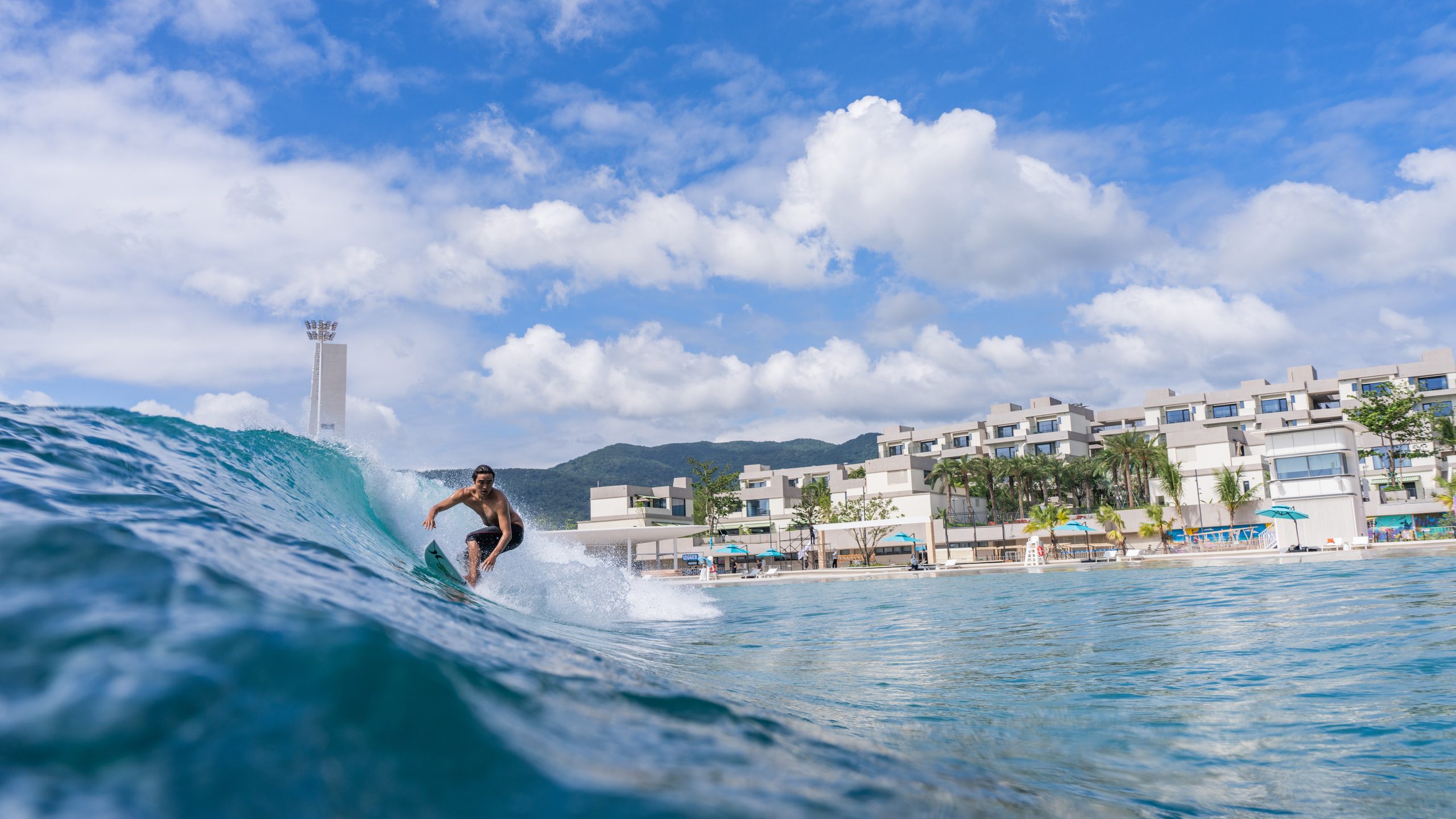
This is where coaching in a pool earns its keep. Two settings run at this level — Jetty, a punchy chest-to-head-high wall for stringing turns together, and Nose Rider, a long mellow face made for trim and cross-steps — and both arrive identically every time. A coach on the deck can see, ride after ride, the thing you cannot feel: the bottom turn started a beat too late, the weight stuck on the back foot, the eyes looking at the board instead of down the line. Because the next wave is the same wave, the fix is tested immediately. The intermediate guide lays out a five-day plan on these two settings; a coached hour on day one is the fastest way to know what the five days should be about.
Advanced: line choice, and the private settings
On Stock Stack and Lowers, the two advanced settings on the public calendar, coaching is about line: where to bottom turn for the section, how much speed to carry into a wrapping turn, when to stall. Beyond the calendar, the barrel and air settings run in private sessions only, and there the coach’s job is positioning and take-off timing on a wave that throws the same hollow section every time — the closest thing surfing has to a laboratory. The advanced guide covers those settings and a four-day plan; a group of experienced surfers running a coached block should read our surf camp guide, because coaching and filming can both be added to a private buyout.
A coached block that works
You do not need a coach in every session, and most guests do not book one. The pattern that works is a coached hour early, a lot of uncoached repetition with footage in between, and a second coached hour once the first fix has settled. The surf calendar shows which settings run at which hours once your dates lock; the pool alternates lefts on odd calendar days and rights on even, so a four-day block gets you both.
Four coached days at Riyue Bay
Boards come from the rental quiver — soft-tops through performance shortboards and longboards — and a coach will often size you onto a different board than the one you would have chosen, which is its own lesson.
What it costs, and how to book it
Everything is on the rate board. Public sessions run 55 minutes and start from CNY 328 per person on the beginner setting, CNY 388 intermediate and CNY 498 advanced. Coaching starts from CNY 228 per person per hour and photo & video from CNY 200 per surfer per session; both are add-ons to any session, and the Surf & Stay package bundles one premium video session per surfer with the sessions, the room and the transfers. Learn-to-surf lesson pricing is on request. All prices are CNY list rates.
To book, tell us three things: your dates, your level, and what you want to fix. That last one is the useful part — it tells us which setting to put you on, whether a private lesson or a clinic makes more sense, and which sessions to film. Everything is confirmed before you land, and the coach knows what you are working on before you do.
Ready to fix the thing?
Browse the trip packages, keep reading the journal, or send your dates, level and goal to hello@surfchina.co (WhatsApp +8613893402173) through the booking page. Getting to Riyue Bay is simple — direct flights from Sydney and Melbourne to Haikou, connections through Hong Kong, Singapore, Bangkok, Kuala Lumpur and Seoul, and 30-day visa-free entry for most of our guests, all in the getting here guide. The wave is scheduled. So is the coach.