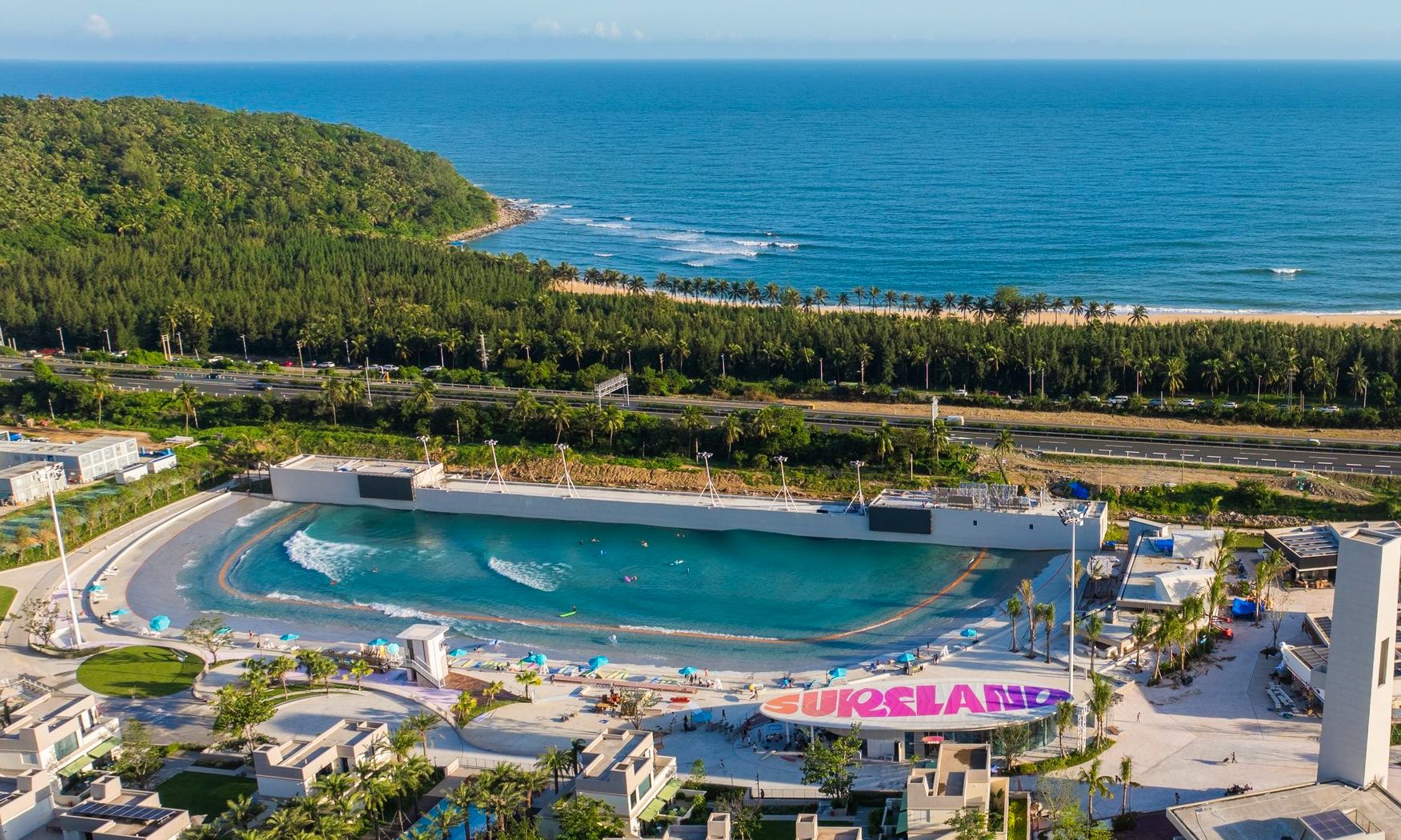
Say “surfing in China” in most lineups and you get a raised eyebrow. That reaction is the whole opportunity. China has a tropical island province, Hainan, whose east coast faces the open South China Sea, and on that coast a bay called Riyue Bay has quietly become the home of Chinese surfing — and the site of the world’s only wave pool on a tropical island. This is the guide we send surfers who ask us where, when and how: the pool, the ocean, the seasons, the flights, the visa and the boards.
Is there really surfing in China?
There is, and it has a clear centre. China’s coastline is enormous, but most of it faces shallow shelf seas that rarely turn swell into anything worth flying for. Hainan is different: it is a tropical island, it sits far enough south for warm water all year, and its east coast takes swell straight off the South China Sea. Riyue Bay in Wanning is where that swell lands first, which is why the bay became China’s surf capital, why the WSL has run longboard events on this coast, and why a PerfectSwell® surf pool was built here rather than anywhere else in the country.
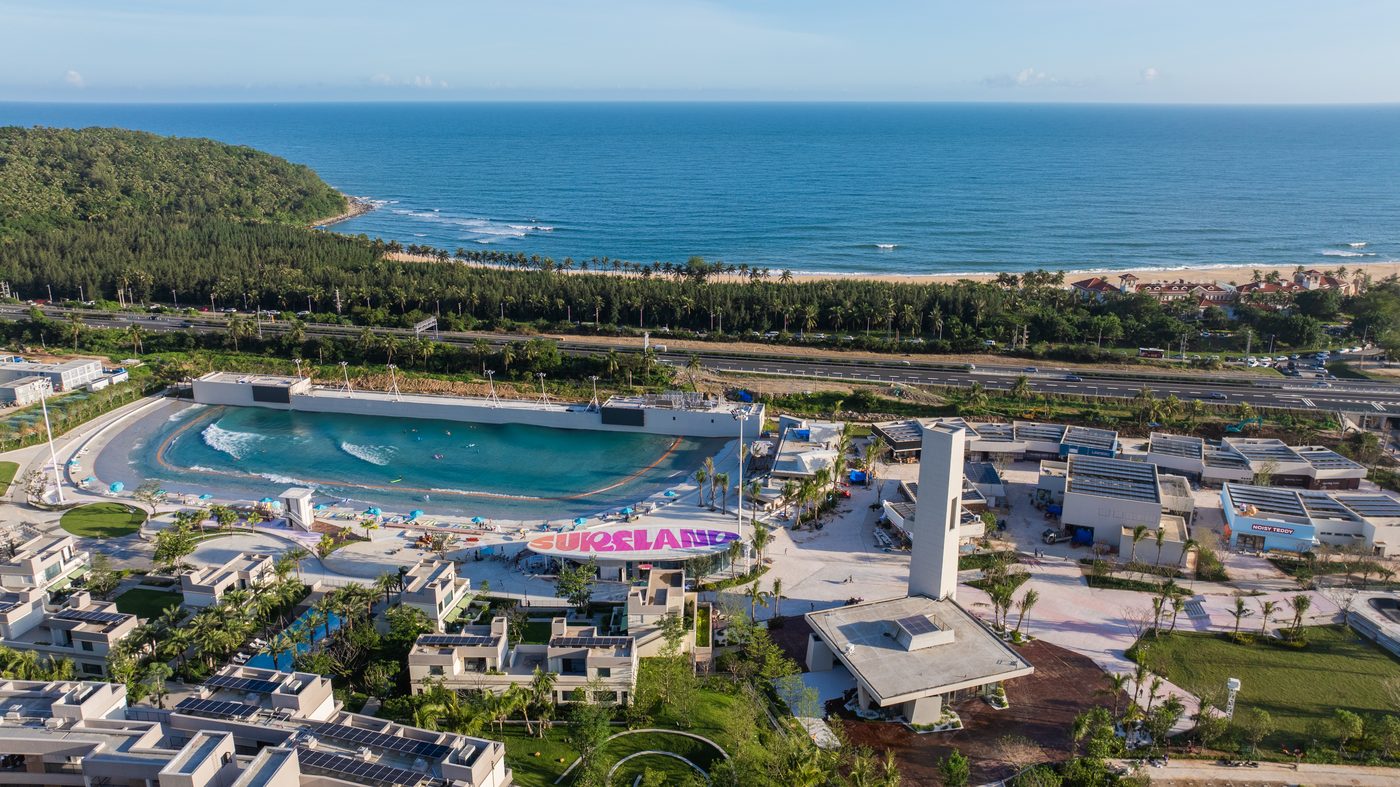
The result is a surf destination that exists nowhere else: a programmed wave pool and a real ocean coast sharing one bay, so the trip is guaranteed by the machine and upgraded by the sea. Our wave pool vs ocean piece goes deeper on how the two fit together; the rest of this guide covers how to actually do it.
Where to surf in China: Riyue Bay, Wanning, Hainan
Riyue Bay (“Sun and Moon Bay”) sits on Hainan’s east coast, about two hours from Haikou airport (HAK) and about an hour from Sanya (SYX), on a coastal highway with the ocean on one side. Two very different kinds of surfing live on the same bay.
The wave pool: PerfectSwell® at Riyue Bay
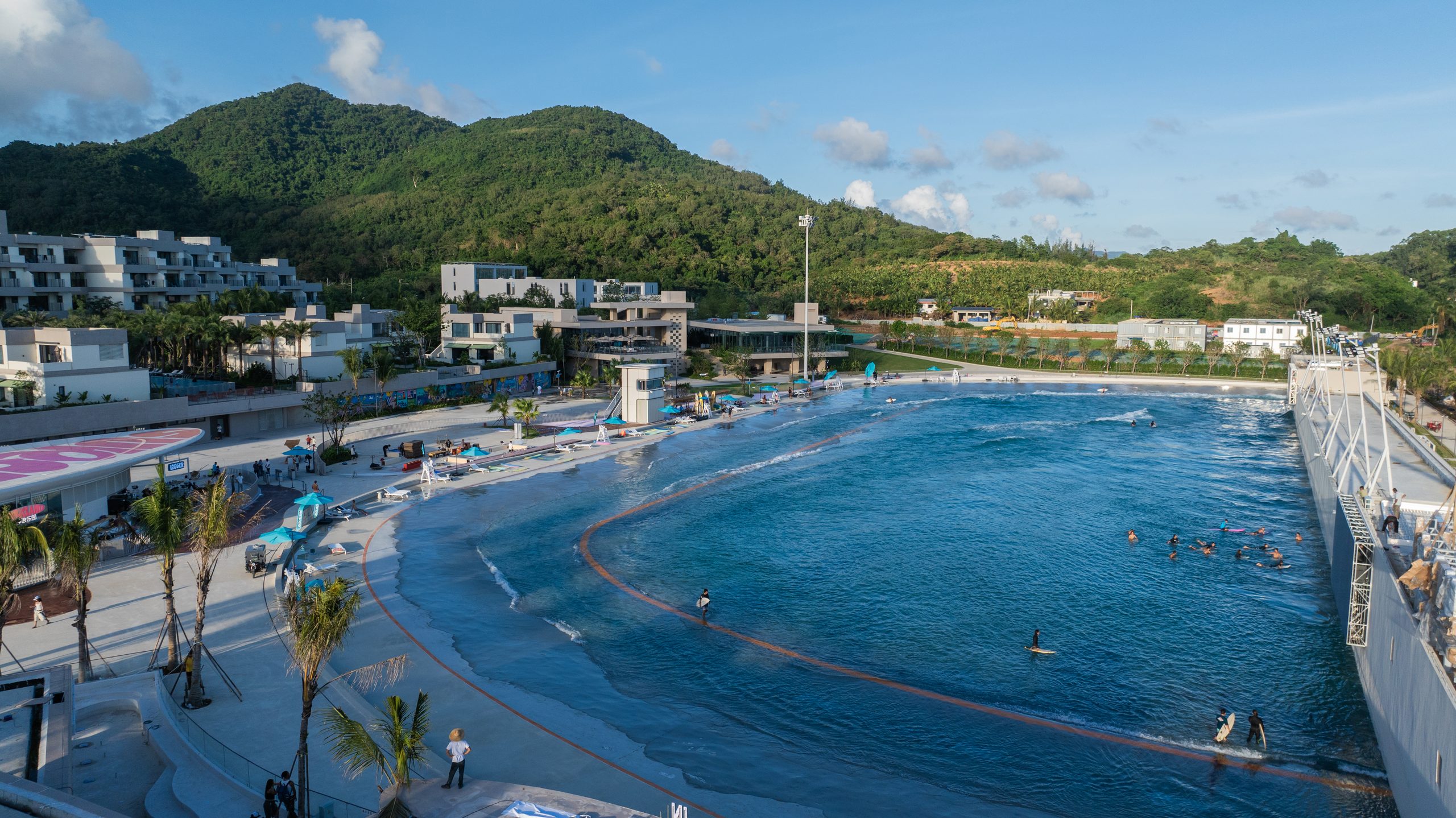
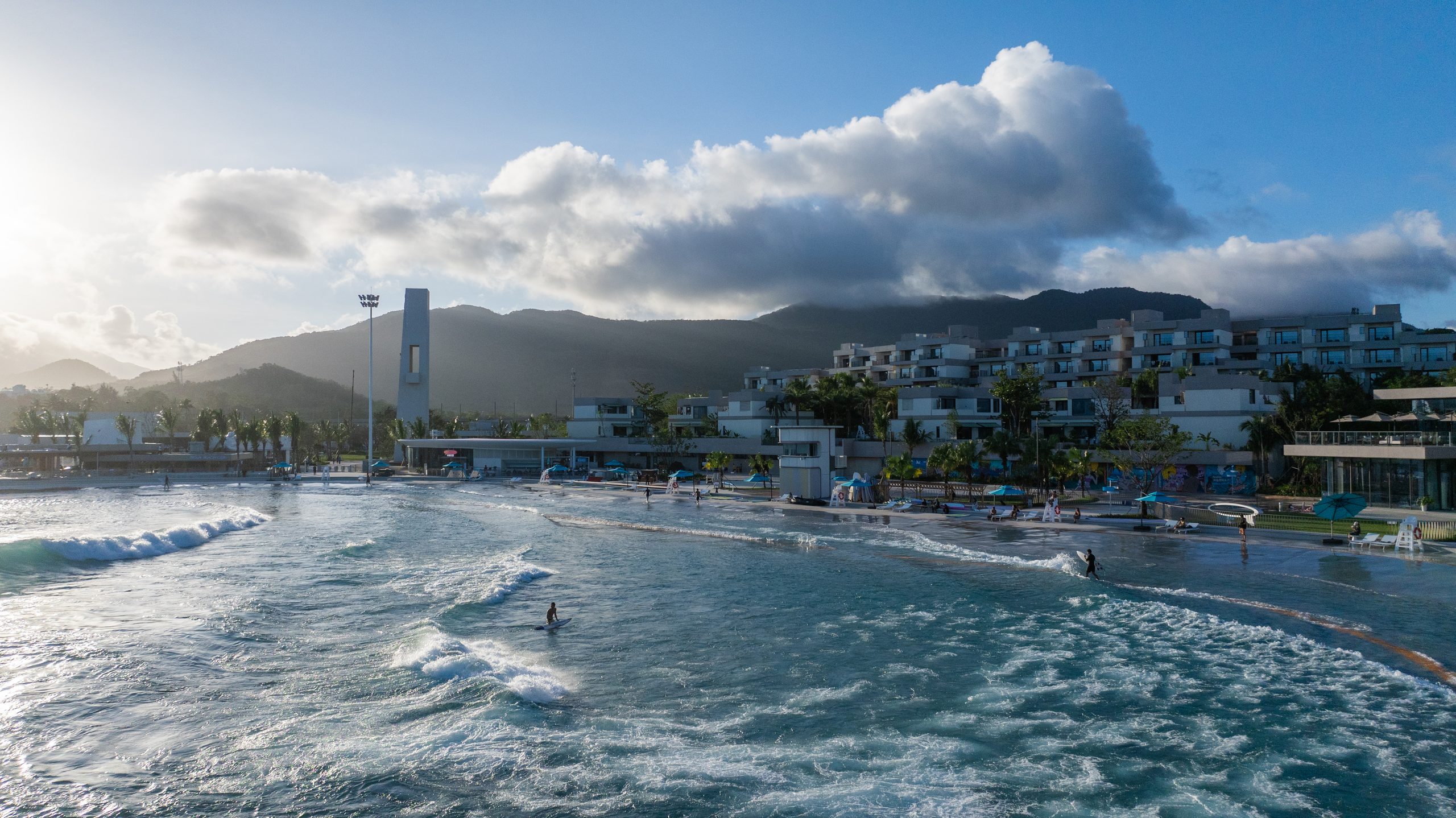
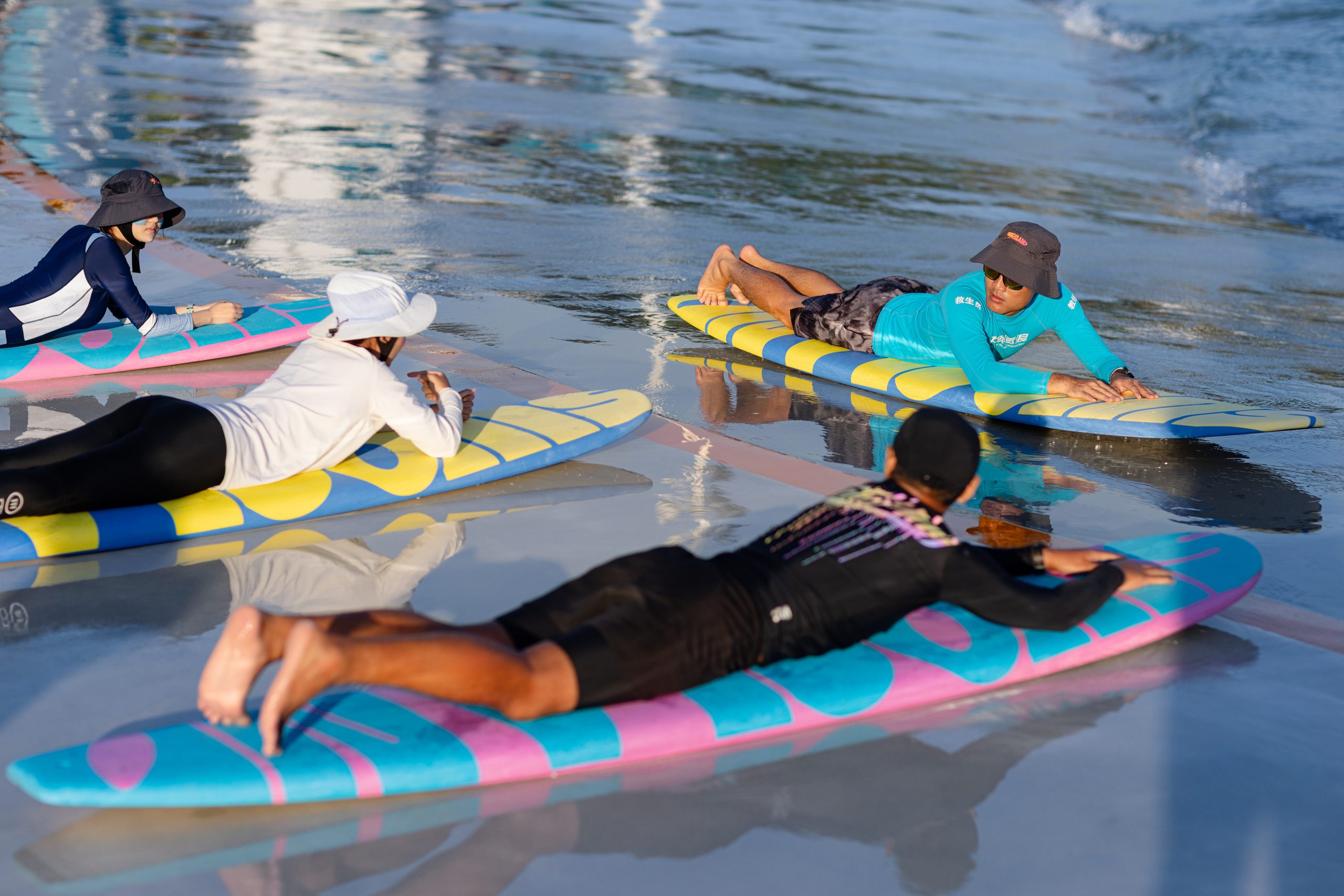
The pool is the anchor of every trip. It runs around 20 wave settings — soft beginner rollers, longboard glides, performance walls, air sections and barrels — in warm water, on a published session grid, with no forecast involved. A wave pool solves the thing that makes surfing slow to learn: the same wave comes back every set, so a beginner gets dozens of identical pop-ups in an hour and an experienced surfer can drill one manoeuvre on repeat. Coached surf sessions put a coach on the wave with you; a private buyout gives the whole pool to your group on the setting you choose. The wave settings page shows each wave with video, and the surf calendar shows which settings run on which day. After a scheduled upgrade the pool reopens on 15 September 2026 — our autumn calendar guide walks through the reopening schedule.
The ocean: two swell windows on the Wanning coast
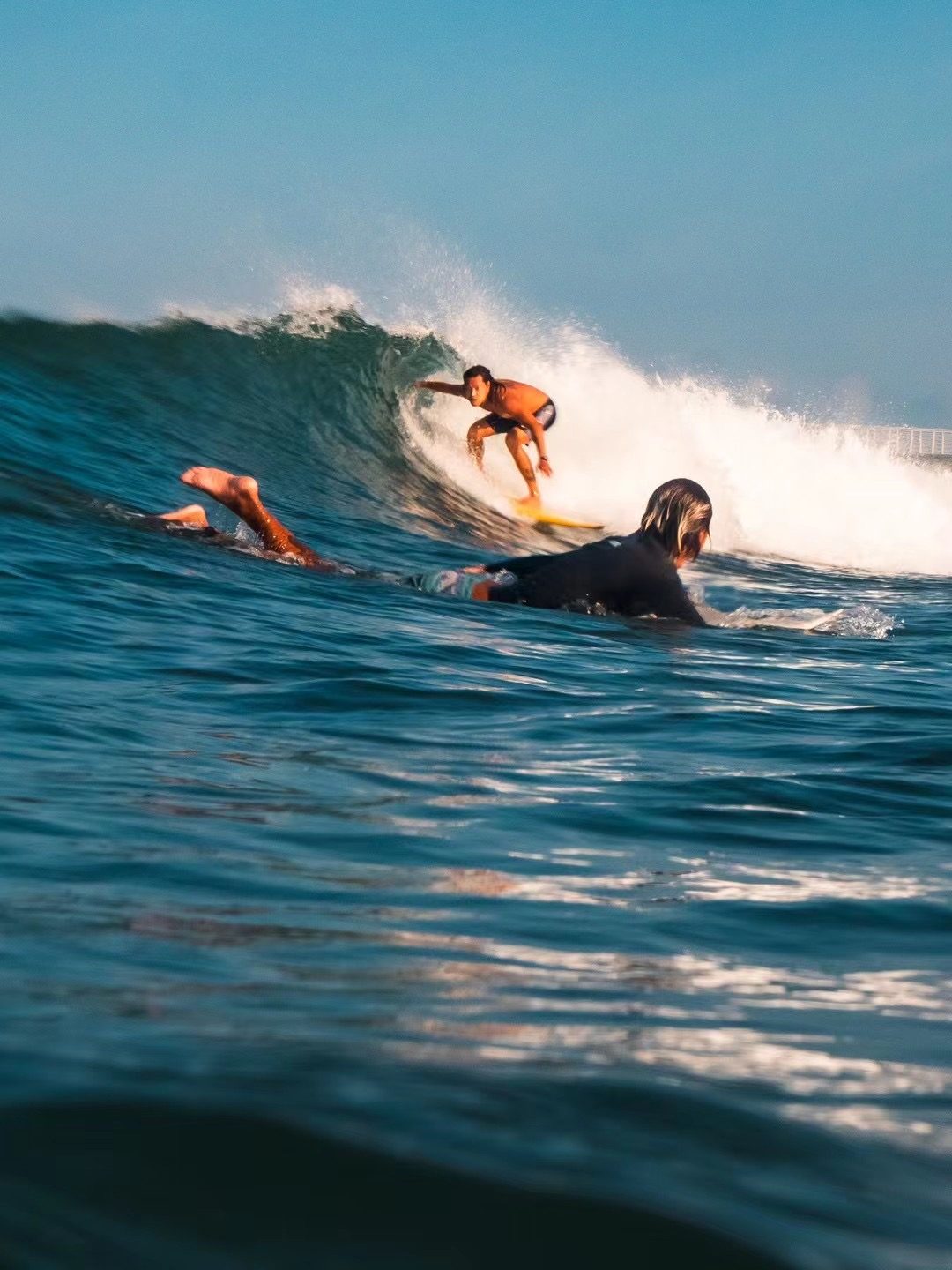
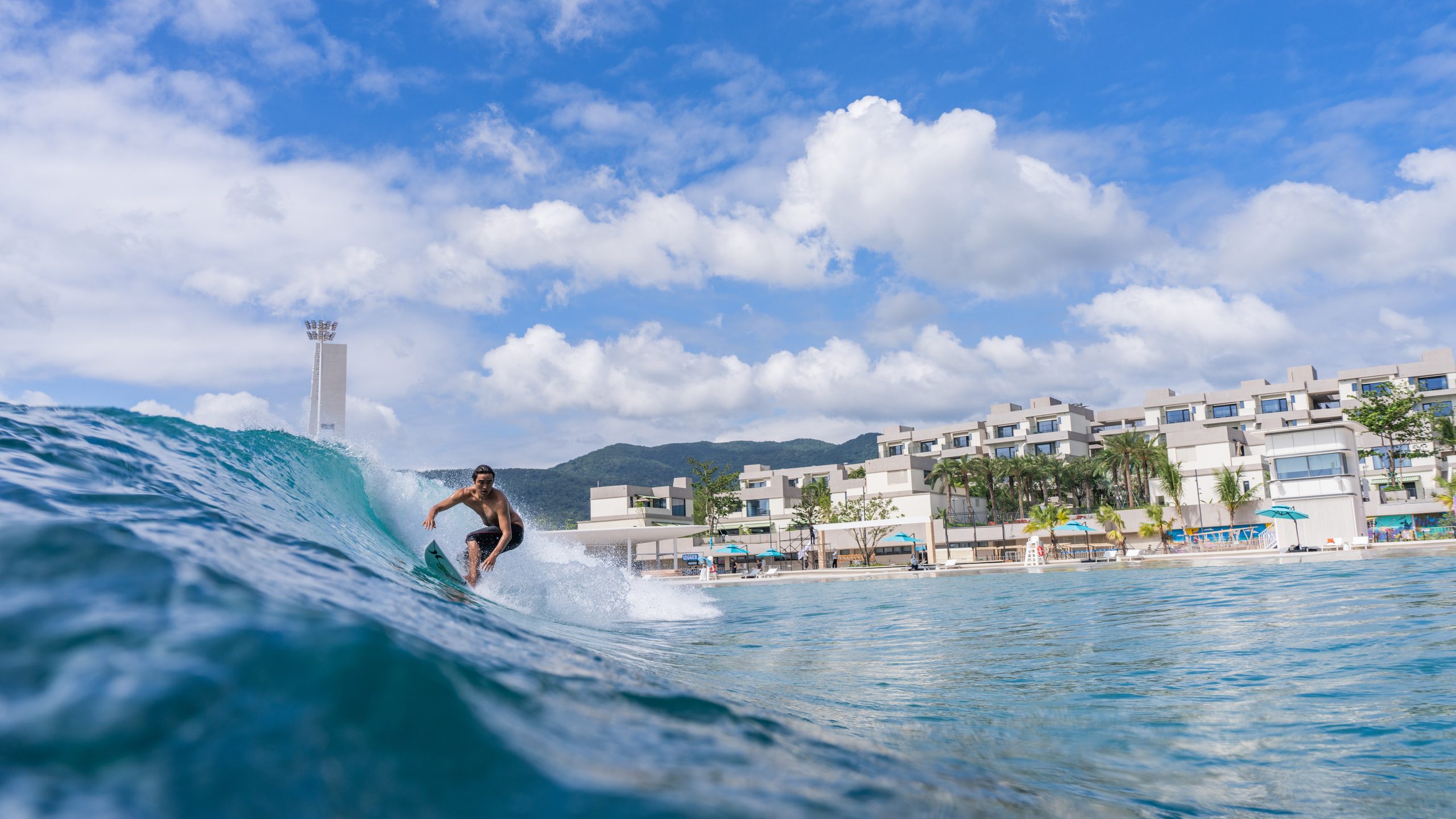
The sea is the surprise. Hainan’s ocean surf runs on two clocks. The dependable window is the cooler months, roughly October to March, when steady seasonal swell wraps into the east coast and Riyue Bay produces the long, organised walls it is famous for — the longboard and mid-length waves the WSL came for. The second window is typhoon swell in the warmer months: faster, heavier and unpredictable, for experienced surfers who happen to be here when a storm tracks through at the right distance. And when conditions are soft, the coast has gentle beach setups that are ideal for kids and first-timers. Out of respect for the coast and the local surf community, we don’t publish spot names or maps; tell us your dates and level and we tell you what your window may offer. The Riyue Bay surf guide covers wave types and boards in detail.
When to go surfing in China
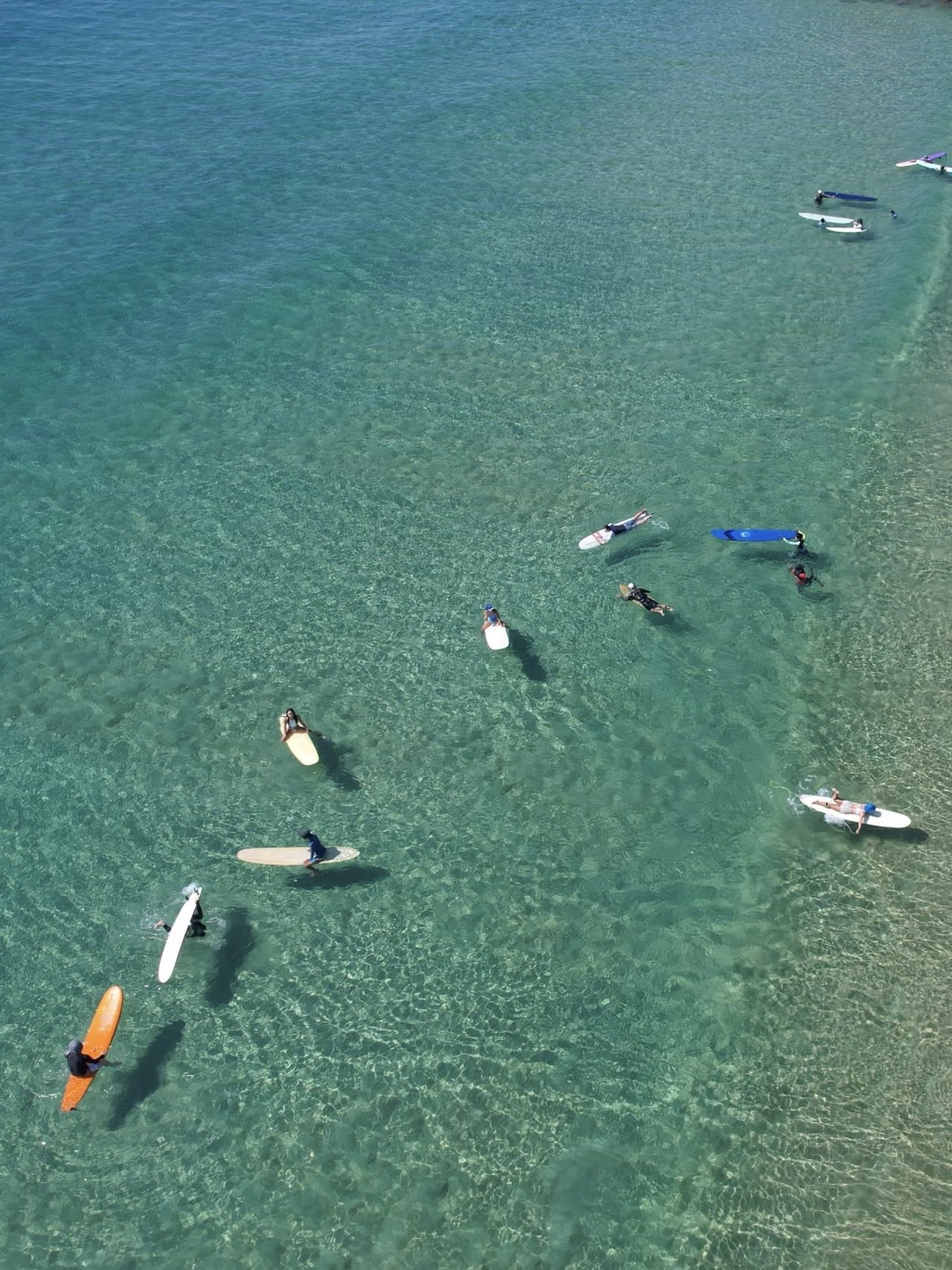
The pool runs year-round, so there is no wrong month for a wave-pool trip. If the ocean matters to you, aim for the cooler months from October to March, when the seasonal swell is most reliable and the longboard walls line up; if you want a shot at heavier surf and can live with uncertainty, the warmer typhoon months are the gamble. Two practical notes: Chinese public holidays — National Day week at the start of October above all — fill the pool’s public sessions, so book those dates well ahead; and the water is warm in every month, so “winter” here means boardshorts. Our season-by-season guide goes month by month.
Getting to China’s surf coast: flights and the visa
This is the part that surprises most people. Hainan offers 30-day visa-free entry for passport holders from the U.S., Australia, New Zealand, the UK, Canada and many other countries, so most surfers need no paperwork at all — the visa-free guide has the detail. Fly into Haikou (HAK), which has direct flights from Sydney and Melbourne, or Sanya (SYX); from most of Asia and beyond you connect through Hong Kong, Singapore, Bangkok, Kuala Lumpur or Seoul. From either airport a private transfer with an English-speaking driver takes you down the coast to Riyue Bay. Every route is mapped in the getting here guide, and there are city-specific plans for surfers coming from Australia and from Hong Kong or Singapore.
Boards, gear and water temperature
Leave the wetsuit at home: the water is warm year-round, so it is boardshorts and a rash vest in every season. Whether to fly with a board depends on what you are here for. In the seasonal ocean window a longboard or mid-length gets the most out of the walls; typhoon swell wants something shorter in experienced hands; and in the pool the board is matched to the setting you book. If you would rather travel light, the rental quiver at Riyue Bay runs from Cabianca and Chilli performance shortboards to Tide Moment longboards and soft tops for beginners, matched to your height, weight and level. The on-site surf shop covers wax, fins, leashes, sunscreen and rash guards, the café covers the hours between sessions, and a recovery space with sauna and ice bath sits about twenty minutes away for the heavier surf days.
Where to stay
The base is the resort built inside the surf-park grounds at Riyue Bay: rooms, breakfast hall, gym, lap pool and rooftop lounge on one property, the pool a minute from your room and the beach on the other side of it. Ocean & Pool View rooms on the upper floors look straight down on the sessions. The room-by-room guide has the rest, and longer trips can add Haikou or Sanya at either end of the island.
Beyond the surf: golf, food and island culture
A surf trip to China comes with a second act most surf destinations can’t offer. Hainan is China’s golf island: The Dunes at Shenzhou Peninsula, the best links course in China, is thirty minutes up the coast, and Blackstone at Mission Hills Haikou — a former world top-100 course cut through black lava fields where Tiger Woods and Rory McIlroy played — is two hours north. Inland, Wanning is Xinglong coffee country, with coconut hotpot and seafood straight off the boats, and Li villages carry two thousand years of island culture in the hills. The rest-day guide lines up the options, and the six-day surf and golf itinerary shows how a week fits together.
How to plan a China surf trip
Start with the trip packages: Surf Escape is the focused wave-pool trip with the resort and coached sessions, and the Surf & Golf Retreat adds the courses. Surf camps, family trips, groups and private pool buyouts are all built to order. Send your dates, group size and surf level through the booking page, or write to hello@surfchina.co (WhatsApp +8613893402173), and your sessions are confirmed before you land. More planning guides live in the journal.